Brighton Half-Time/Full-Time Betting
 Available in US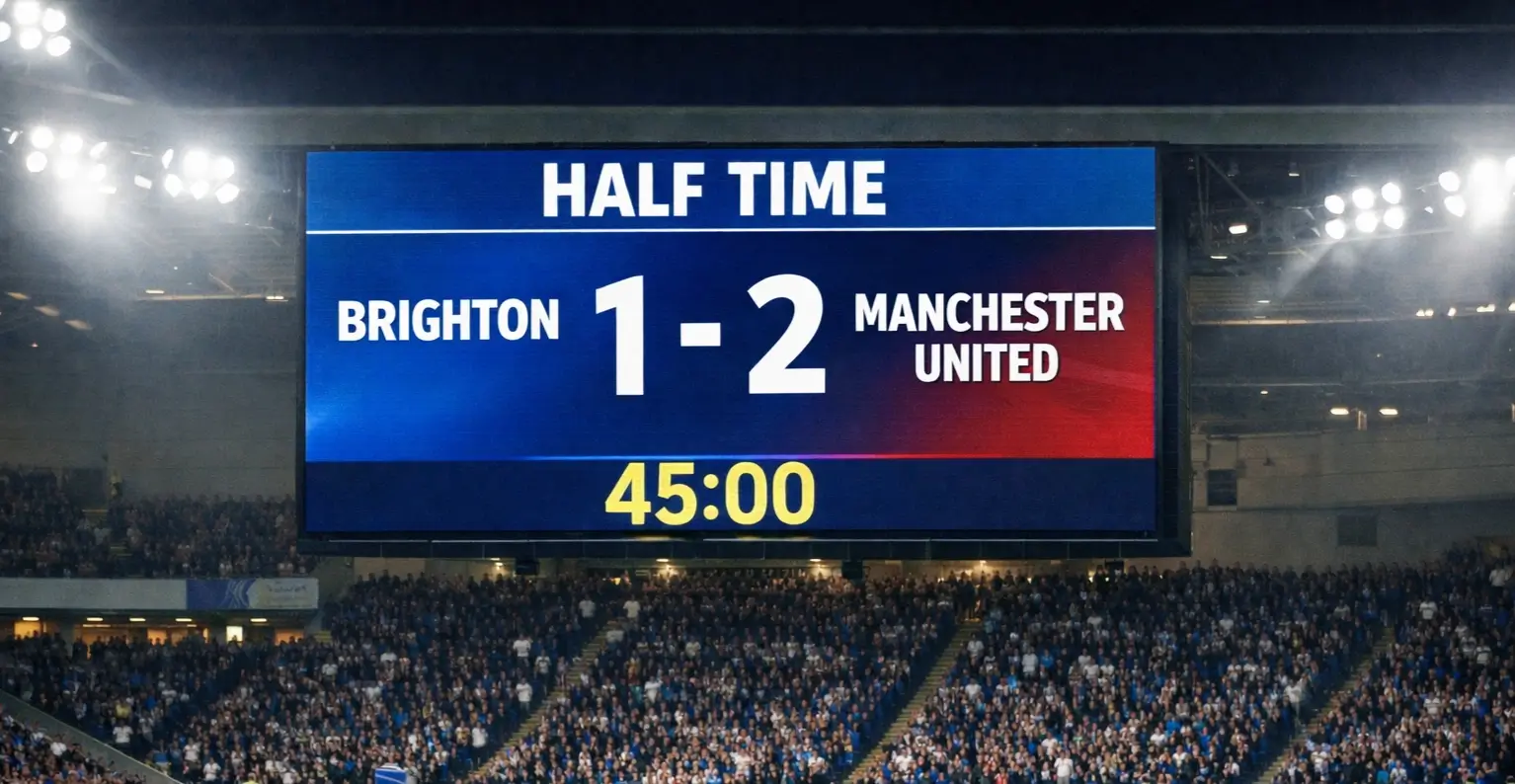
Football matches unfold across ninety minutes, but bettors can slice that time into segments that reveal patterns invisible in final scorelines. Half-time/full-time betting exploits these timing patterns, asking not just who will win but when the winning will happen. Brighton & Hove Albion under Fabian Hürzeler display distinctive scoring rhythms that create opportunities in these markets when properly understood.
The fundamental insight driving half-time/full-time analysis involves recognising that teams don’t perform uniformly across match halves. Some teams start fast and fade. Others build pressure gradually before breaking through. Brighton’s patterns reflect their tactical approach: patient possession building toward chances, pressing intensity that peaks and troughs, and substitution strategies that frequently change second-half dynamics.
Understanding when Brighton score and concede transforms half-time/full-time markets from speculation into informed betting. The timing patterns emerge from tactical mechanisms rather than random chance, suggesting sustainability that supports confident market engagement.
Brighton’s First-Half Profile
Brighton’s first halves typically feature controlled possession without necessarily producing goals. Their patient build-up philosophy means breaking down defences takes time. Early in matches, opponents remain fresh, organised, and difficult to penetrate. Brighton’s pressing generates turnovers, but converting those turnovers into goals requires sustained pressure that accumulates rather than explodes.
The statistical reality shows Brighton don’t dominate first halves as comprehensively as their overall match statistics suggest. First-half unders markets often offer value because Brighton’s methodical approach delays goal production. Matches that finish 3-1 might have been 0-0 or 1-0 at halftime, with goals clustering in the second period.
This first-half patience creates specific betting opportunities. First-half under 0.5 goals represents a conservative play when Brighton face disciplined defensive opponents. Both teams need time to impose themselves, and the opening 45 minutes often pass without a goal changing hands. The prices for first-half under 0.5 in Brighton matches don’t always reflect this tendency accurately.
However, Brighton’s first-half scoring isn’t negligible. They score in first halves regularly enough that backing first-half unders carries genuine risk. The opportunity exists in identifying specific matchups where first-half goals become particularly unlikely: defensive opponents, away fixtures, matches where both teams prefer slow starts.
Brighton’s Second-Half Tendencies

Second halves tell a different story. Brighton scored more goals in the final fifteen minutes than most Premier League teams during 2024-25. Only Bournemouth exceeded their late-goal production. This pattern reflects several factors: accumulated pressure breaking through, opponent fatigue creating space, and Hürzeler’s aggressive substitution strategy introducing fresh attacking legs.
Brighton made more substitutions than any other Premier League manager during 2024-25. These changes frequently involve attacking players, with fresh forwards replacing tiring ones to maintain pressure. The bench impact shows in goals: substitutes contributed significantly to Brighton’s scoring, often providing the decisive moments that turned draws into wins.
The second-half goal tendency creates multiple betting angles. Second-half over 0.5 goals offers value in matches where first halves finish scoreless. Brighton’s pressure typically yields eventually, and their late-match quality makes second-half goals probable regardless of first-half events. Over 1.5 second-half goals becomes attractive when Brighton trail at the break, as their response to adversity involves pushing forward aggressively.
Opponent fatigue compounds Brighton’s second-half advantage. Teams that expend energy pressing Brighton or defending for extended periods tire as matches progress. The space that wasn’t available in the first half opens as legs heavy. Brighton’s fitness levels, among the league’s best for distance covered and sprinting, mean they maintain intensity longer than most opponents.
Half-Time/Full-Time Market Mechanics
The half-time/full-time market offers nine possible outcomes combining first-half result with full-time result. Brighton’s patterns suggest specific outcomes deserve attention while others warrant avoidance.
Draw/Brighton Win represents the classic late-winner scenario. Matches level at halftime frequently end with Brighton victorious because their second-half superiority manifests in goals that break deadlocks. When Brighton face opponents they should beat but who might frustrate early, draw/draw at halftime transitioning to Brighton win at full-time captures their typical match arc.
The odds for draw/Brighton win typically range from 4.00 to 7.00 depending on opponent. These prices must adequately compensate for the multiple things that must happen: a scoreless or level first half, then Brighton scoring without opponent response. When your analysis suggests this sequence represents good probability, the prices often offer genuine value.
Brighton/Brighton suits matches where Brighton should dominate from the start. Home fixtures against relegation candidates or cup matches against lower-league opponents see Brighton score early and maintain control. The shorter odds reflect higher probability, but the market still offers value when Brighton’s dominance should be particularly pronounced.
Opponent/Brighton represents comeback scenarios. Brighton demonstrated resilience during 2024-25, recovering from behind against Manchester City, Tottenham, and other opponents. Their response to falling behind involves intensified attacking, which can flip match outcomes when opponents fail to protect leads. However, this outcome remains less probable than other combinations and should be approached cautiously.
Game State Analysis
Brighton’s behaviour changes based on scoreline, and understanding these changes improves half-time/full-time betting.
When Brighton lead at halftime, their second-half approach balances protecting the advantage with seeking additional goals. They don’t become dramatically conservative, maintaining attacking intent while slightly reducing risk-taking. Brighton/Brighton prices may underestimate the probability because their lead-protecting ability improved under Hürzeler’s more structured approach compared to De Zerbi’s relentless attacking.
When level at halftime, Brighton typically increase pressure in second halves. The draw becomes less acceptable as time passes, pushing them toward greater attacking commitment. Draw/Brighton win probability increases in these scenarios because their second-half quality exceeds their first-half output.
When trailing at halftime, Brighton’s response varies by opponent quality. Against weaker teams, they expect to create enough chances to recover. Against stronger opponents, recovery becomes less likely despite increased effort. Opponent/Brighton win represents a lower-probability outcome that requires both Brighton comeback and failure to extend leads by opponents.
Live Betting Applications
Half-time provides a natural betting interval where markets reset based on the first-half result. Live betting at halftime offers opportunities based on observed match dynamics rather than pre-match assumptions.
If Brighton dominate the first half without scoring, halftime provides opportunity to back them at enhanced prices. The market typically drifts when expected goals haven’t converted to actual goals, but if the dominance appears sustainable, the drift represents value rather than accurate repricing.
If opponents lead at halftime against the run of play, backing Brighton to recover can offer value. A single counter-attacking goal doesn’t necessarily reflect match dynamics, and Brighton’s second-half tendencies favour goals regardless of first-half scoreline.
The key involves reading whether first-half events reflect genuine match dynamics or temporary variance. Brighton’s expected goals figures at halftime, observable through live statistics, help distinguish these scenarios. High Brighton xG despite trailing suggests betting value on their recovery.
Timing Markets Beyond HT/FT
Beyond the classic half-time/full-time market, bookmakers offer various timing-based propositions that Brighton’s patterns inform.
First goalscorer timing markets ask when the match’s first goal will arrive. Brighton’s patient approach suggests backing later first-goal timing in matches against organised opponents. The first fifteen minutes often pass without goals when Brighton face teams content to defend initially.
Correct score at halftime offers higher odds for low-scoring predictions. Brighton matches finishing 0-0 at halftime occur frequently enough that these prices sometimes represent value. The gradual nature of their attack means many matches remain level after 45 minutes.
Race to goals markets ask which team reaches certain goal totals first. Brighton’s second-half strength means they often win races to two or three goals even when opponents score first. Their comeback ability and late-goal production create scenarios where early opponent goals don’t predict race outcomes.
Practical Framework
Effective half-time/full-time betting on Brighton requires synthesising multiple factors.
First, assess opponent defensive organisation. Disciplined teams that frustrate Brighton early extend matches toward second-half resolution, favouring draw/Brighton win outcomes.
Second, consider venue effects. Brighton’s home dominance produces earlier goals than away fixtures. Brighton/Brighton outcomes suit home matches; draw/Brighton win suits tougher away fixtures.
Third, monitor team news for substitution options. Hürzeler’s bench impact depends on having quality attacking options available. Injuries to key substitutes reduce Brighton’s second-half advantage.
Fourth, factor in match context. Matches with European qualification implications see Brighton pressing harder earlier. End-of-season dead rubbers might produce different patterns than high-stakes fixtures.
The half-time/full-time market rewards understanding of how matches unfold rather than just how they finish. Brighton’s distinctive timing patterns, their second-half strength, and their substitution impact create opportunities that simple match result analysis misses. The market complexity deters casual bettors, but for those willing to analyse timing dynamics, the prices often offer genuine value.
