Bankroll Management for Football Betting: Premier League Edition
 Available in US
Introduction: Why Most Bettors Fail
The uncomfortable truth about football betting is that most people lose money not because their analysis is wrong, but because their bankroll management is catastrophically flawed. You can identify value correctly, understand tactical matchups brilliantly, and still end up broke because you sized bets recklessly or chased losses during inevitable downswings. Bankroll management isn’t the sexy part of betting that generates passionate debates—it’s the unglamorous foundation that determines whether you survive long enough for your analytical edges to materialize into profits.
Premier League betting specifically creates psychological traps that destroy undisciplined bankrolls. The league’s global popularity means matches get broadcast everywhere, creating constant betting opportunities that seduce you into action when patience would serve better. The tactical sophistication and competitive balance mean even strong favorites lose regularly, generating variance that tests emotional discipline. And the social aspect—friends betting, media coverage hyping matches, betting communities discussing plays—creates pressure to have action on games where no genuine edge exists.
What separates long-term winners from the overwhelming majority who eventually quit after depleting their funds isn’t access to better information or superior analytical skills. It’s the discipline to implement systematic bankroll management that protects capital during losing streaks while allowing sufficient risk-taking to generate meaningful returns during winning periods. The mathematics of bankroll management aren’t particularly complex, but the psychological discipline required to follow those mathematical principles when real money is at stake proves beyond most bettors’ capacity.
This guide explores bankroll management specifically for Premier League betting, where the characteristics of English football—competitive balance, high variance, emotional attachment—create unique challenges requiring tailored approaches. The principles apply broadly across sports betting, but the implementation details matter enormously for betting on Brighton, Arsenal, or any other Premier League side you follow.
The framework we’re building here assumes you’re treating betting as serious pursuit of profits rather than pure entertainment. If you’re betting for fun with money you’re happy to lose as entertainment expense, bankroll management matters less—just bet what you can afford and enjoy the ride. But if you’re reading this hoping to generate actual returns, treating betting capital with the respect investment capital deserves becomes non-negotiable.
Stop hoping your next winner will solve bankroll problems created by poor staking. Start implementing systematic frameworks that ensure you’ll still have capital available when genuine value opportunities appear.
The Unit System Explained
Professional bettors think in units rather than raw currency amounts, and understanding why this matters transforms how you approach staking decisions. The unit system provides flexible framework that scales with your bankroll size while maintaining consistent risk exposure regardless of whether you’re betting with hundreds or thousands.
One unit represents a fixed percentage of your total bankroll—typically between one and five percent depending on risk tolerance and confidence in your edge. If your total betting bankroll is two thousand pounds and you define one unit as one percent, each unit equals twenty pounds. Every bet gets sized as some multiple of that unit based on perceived edge and confidence, creating systematic approach that removes emotional decision-making from stake sizing.

The percentage-based approach creates automatic scaling as bankroll grows or shrinks. When you win and bankroll increases to twenty-four hundred pounds, your one-percent unit grows to twenty-four pounds. When you lose and bankroll drops to eighteen hundred, your unit shrinks to eighteen pounds. This automatic adjustment means you’re betting larger amounts when winning and smaller amounts when losing, creating natural hedge that reduces ruin risk.
Defining your unit size requires honest assessment of risk tolerance and bankroll adequacy. Conservative bettors comfortable with slow, steady growth might use one-percent units. Moderate risk-takers might use two-percent units, accepting larger swings for faster potential growth. Aggressive bettors willing to stomach significant variance might push to three or even five-percent units, though anything above two percent creates substantial ruin risk unless you possess genuine edges.
The key principle: your unit size should create stakes where individual losses hurt but don’t devastate. Losing a single bet shouldn’t force you to modify your approach or reduce activity because bankroll has been damaged. If losing one bet makes you anxious about affording your next several bets, your unit size is too large relative to bankroll and needs reduction.
Standard bets warrant one or two units depending on confidence. When you identify solid value in a Premier League match—perhaps Brighton both teams to score or Arsenal minus one goal against weak opposition—backing it for one or two units represents appropriate risk for typical edge. These aren’t spectacular plays requiring outsized bets, just the steady diet of value opportunities that generate long-term profits through repetition.
Strong conviction plays might justify two to three units when your analysis reveals exceptional value. Maybe you’ve identified tactical mismatch that bookmakers have mispriced, or injury news hasn’t been properly incorporated into odds. These situations where your informational or analytical advantage appears substantial warrant increased stakes capturing value before markets correct. But even strong conviction plays rarely justify exceeding three units because the risk of being wrong—missing something in your analysis or suffering bad luck—remains ever-present.
The four and five-unit bets should remain exceptionally rare, reserved for once-in-a-season opportunities where everything aligns perfectly. Perhaps you’ve identified arbitrage opportunity guaranteeing profit, or market inefficiency so glaring that risk effectively disappears. These unicorn situations don’t appear often, and mistaking standard value plays for exceptional opportunities leads to overleveraging that destroys bankrolls during inevitable losses.
Tracking your units won and lost rather than raw currency creates psychological detachment from money that helps maintain discipline. Losing twenty pounds feels different than losing one unit, even when they’re mathematically identical. The unit framework creates mental abstraction layer that reduces emotional reaction to individual results, helping you focus on long-term process rather than short-term outcomes.
Recalculating your unit size periodically—monthly or quarterly—ensures your stakes remain appropriate as bankroll grows or shrinks. Some bettors recalculate after every bet for maximum precision, though this creates administrative burden that might not justify the marginal improvement. Whatever recalculation frequency you choose, consistency matters more than the specific timing.
The psychological benefit of starting with smaller units cannot be overstated. Beginning with half-percent or one-percent units creates comfortable buffer allowing you to make mistakes while learning without destroying your bankroll. Once you prove profitability across significant sample size, you can increase unit size capturing greater value from your edge. But starting aggressively then discovering you lack edge leads to depleted bankroll before you’ve learned anything useful.
Apply these global rules specifically to the Seagulls with our Brighton bankroll management guide.
The Kelly Criterion: Mathematical Bankroll Optimization
The Kelly Criterion represents mathematically optimal approach to position sizing that maximizes long-term bankroll growth. Originally developed for gambling and investing contexts, Kelly provides formula for determining ideal bet size based on your edge and the odds offered. For bettors possessing genuine analytical advantages, Kelly sizing ensures you’re capturing maximum value from that edge without overleveraging and risking ruin.
The basic Kelly formula: (bp – q) / b, where b represents the decimal odds minus one, p represents your estimated probability of winning, and q represents your estimated probability of losing (1 – p). When you believe Brighton has sixty percent chance to score but bookmakers offer even money (2.0 decimal odds), Kelly suggests betting ten percent of your bankroll on that outcome. The formula automatically accounts for both edge size and odds offered, increasing suggested stake when edge is large or odds are favorable.
Full Kelly betting creates maximum theoretical growth but also maximum variance. Betting the full Kelly-suggested amount generates fastest long-term bankroll growth mathematically possible while still maintaining zero risk of ruin. However, full Kelly produces swings that most bettors find psychologically intolerable—routine twenty or thirty-percent drawdowns that test discipline and commitment to the process.
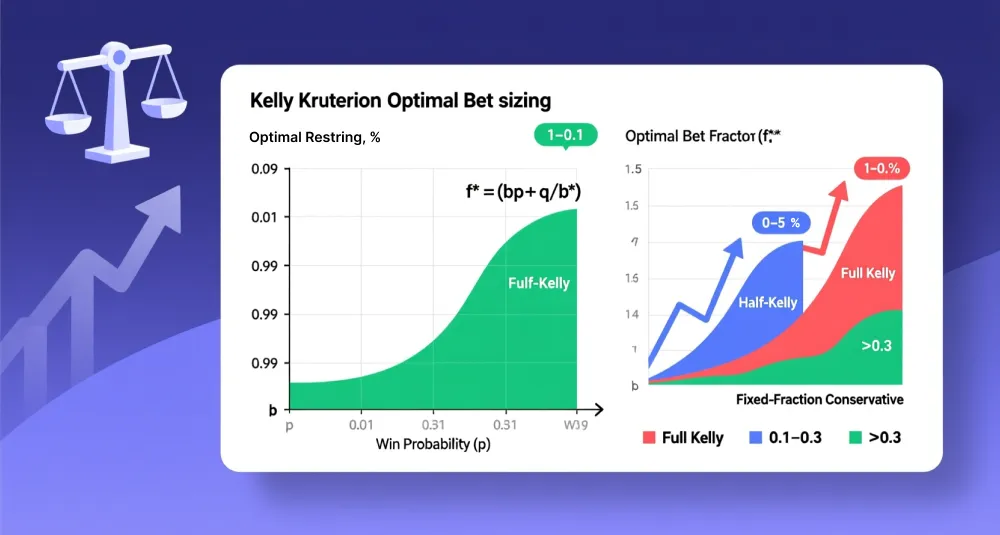
Most professional bettors use fractional Kelly—betting some fraction of the Kelly-suggested amount—to reduce variance while still capturing substantial growth. Half Kelly (betting fifty percent of Kelly suggestion) generates roughly seventy-five percent of full Kelly’s growth while cutting variance significantly. Quarter Kelly reduces growth to roughly fifty percent of full Kelly but creates much smoother equity curve that’s easier to stomach psychologically.
The critical challenge with Kelly involves estimating your true edge accurately. The formula is only as good as your probability estimates, and overestimating your edge leads to overleveraging that compounds losses. If you believe you have sixty-percent chance when true probability is fifty-percent, Kelly suggests stakes that are too large for your actual edge, creating substantial risk. This is why conservative probability estimates and fractional Kelly usage provide safety margin against overconfidence.
For Premier League betting specifically, accurately estimating true probabilities requires accounting for countless variables: form, injuries, tactical matchups, motivation, referee tendencies. Even sophisticated models struggle to estimate probabilities within five percentage points of true values. This inherent uncertainty argues for conservative fractional Kelly usage even when you’re confident in your analysis.
Implementing Kelly for multiple simultaneous bets creates additional complexity. When you want to back several outcomes in the same gameweek, treating each bet independently and applying Kelly separately can lead to overleveraging your total bankroll across all positions. More sophisticated approaches involve portfolio optimization across all bets, but most bettors find this mathematically challenging. Simpler solution: reduce individual Kelly stakes when placing multiple bets, ensuring total exposure across all positions remains manageable.
The Kelly Criterion also highlights why betting without edge leads to ruin. When your estimated probability equals the implied probability from odds (no edge), Kelly suggests betting zero. When odds are worse than fair value (negative edge), Kelly suggests negative bet size—essentially recommending you take the other side. This mathematical reality demonstrates that bankroll management cannot overcome poor value identification—you need genuine edge first, then Kelly helps maximize that edge.
Critics of Kelly argue the formula makes unrealistic assumptions about edge constancy and bet independence while requiring impossible accuracy in probability estimation. These criticisms have merit, which is why blindly following Kelly without adjustments for real-world complexity proves problematic. Use Kelly as guide rather than gospel, adjusting for uncertainty and personal risk tolerance.
The psychological discipline required for Kelly betting cannot be overstated. The formula will recommend bets that feel uncomfortably large when edge appears substantial, and these aggressive stakes create anxiety during losing streaks. Maintaining trust in the mathematical framework when you’re down twenty percent and Kelly suggests continuing to bet aggressively requires fortitude most people lack. This is another reason fractional Kelly makes sense—reducing stake sizes to levels your psychology can handle ensures you’ll maintain discipline through inevitable downswings.
Variance Management: Surviving the Swings
Understanding variance—the statistical fluctuation in results around expected value—represents critical component of bankroll management that most losing bettors completely misunderstand. Variance doesn’t care about your analysis, discipline, or edge. Even with genuine skill and positive expectation, you’ll experience extended losing streaks that test your conviction and deplete your bankroll if you haven’t prepared appropriately.
The mathematics of variance are brutal. With fifty-five percent win rate at even money—representing solid edge that would make you profitable long-term—you’ll still experience losing streaks of six or more bets roughly twelve percent of the time. Lose six consecutive two-percent units and you’re down twelve percent before accounting for compound effects. These streaks happen not because your analysis failed but because variance manifests in clusters of losses that feel devastating when experienced.
Premier League betting specifically creates high variance due to the sport’s characteristics. Football is lower-scoring than basketball, creating more opportunities for random outcomes to determine results. The best team can dominate possession and chances yet lose to a deflected goal or referee error. Variance in football outcomes exceeds variance in higher-scoring sports, which means bankroll swings will be larger even with identical analytical edge.
Managing variance requires accepting you cannot eliminate it—you can only structure your approach to survive it. Smaller unit sizes create buffer allowing you to weather extended losing streaks without depleting bankroll. Using one-percent units means you can lose twenty consecutive bets and still have eighty percent of bankroll remaining. Using five-percent units means just ten consecutive losses cut your bankroll in half, severely limiting your ability to continue betting until variance swings positive.

Diversification across bet types and markets reduces correlation risk that amplifies variance. Betting only on match outcomes creates correlation when unexpected results happen league-wide during particular gameweeks. Diversifying across different markets—match odds, both teams to score, Asian handicaps, goal totals—creates portfolio where different bets respond to different game characteristics, smoothing overall variance.
Time diversification reduces short-term variance by spreading bets across multiple matches rather than concentrating on single events. Betting on five Premier League matches creates less variance than betting your entire weekly allocation on one match. When one bet loses, the others might win, smoothing results. This diversification doesn’t improve long-term expectation if edge is equal across bets, but it does reduce short-term swings that test discipline.
The variance in different bet types varies dramatically. Backing heavy favorites at odds-on prices creates less variance than backing long shots at plus-money prices. Asian handicaps at popular numbers create less variance than exact correct scores. Understanding variance characteristics of different markets helps select betting approaches matching your psychological tolerance for swings.
Accept that variance sometimes means excellent analysis produces terrible results. You can identify value perfectly, size bets appropriately, and still lose repeatedly because the inherent randomness in football produces unexpected outcomes. This doesn’t invalidate your approach—it’s just variance doing what variance does. Trust your process through these periods rather than abandoning sound strategy because short-term results disappoint.
Long-Term vs Short-Term Thinking
Profitable betting requires patience that most gamblers completely lack. Short-term results—whether spectacular wins or devastating losses—mean almost nothing for determining whether your approach generates positive expectation. Only long-term trends measured across hundreds or thousands of bets reveal truth about your betting skill.
The sample size required for meaningful conclusions about betting profitability exceeds what most people intuitively expect. With fifty-five percent win rate at even money—representing solid edge—you need roughly five hundred bets before you can be ninety percent confident your results reflect skill rather than luck. Before reaching that sample size, your results remain ambiguous between genuine edge and fortunate variance.
This statistical reality means you cannot judge your betting approach based on results from one weekend, one month, or even one season. Early results tell you almost nothing about long-term expectation. You might be on pace for one hundred-percent annual returns after two months purely from variance, then regress dramatically. Or you might be losing after six months despite having genuine edge that hasn’t manifested yet through variance fog.

The psychological challenge involves maintaining discipline through short-term results that conflict with your expectations. Losing three months in a row while following sound strategy tests conviction in ways that most bettors can’t withstand. They abandon their approach right when sample size is finally growing large enough for edge to show, never accumulating sufficient bets to distinguish skill from noise.
Building long-term mindset requires framing betting as marathon rather than sprint. Each individual bet represents tiny sample contributing to eventual verdict on your approach. Winning or losing single bets doesn’t validate or invalidate your methodology—only aggregate results across massive samples provide that verdict. Maintain this perspective by focusing on process quality rather than short-term outcomes.
Tracking cumulative profit over time helps visualize long-term trends versus short-term noise. Plot your bankroll on graph showing date on horizontal axis and bankroll size on vertical axis. Upward trends with manageable variance suggest genuine skill. Wild swings without clear trend suggest you’re experiencing variance without edge. Downward trends obviously indicate something requires changing in your approach.
Separating luck from skill requires honest analysis of whether your wins came from genuine edge or fortunate variance. When you win several bets because last-minute goals went your way, that’s variance favoring you. When you win because your analysis correctly identified value that played out as expected, that’s skill. Track not just results but why results occurred to distinguish between deserved and fortunate outcomes.
The compound growth possible through betting makes long-term thinking financially compelling. Earning five percent monthly returns doesn’t sound spectacular until you realize that compounds to eighty percent annually. But capturing that growth requires weathering inevitable months where you lose five or ten percent, trusting the long-term edge to overcome short-term setbacks. Impatience destroys the compounding opportunity by forcing desperate alterations during temporary drawdowns.
Avoid the gamblers’ fallacy that losing streak means you’re “due” for wins. Each bet is independent event unaffected by previous results. Past losses don’t create debt the universe owes you in future wins. This fallacy tempts bettors to increase stakes after losses, convinced their luck must turn. But probability doesn’t work that way—each bet faces the same odds regardless of previous outcomes.
Similarly, avoid the hot hand fallacy believing winning streaks will continue because you’re “running hot.” Recent wins don’t predict future success unless something about your analytical process has genuinely improved. Increasing stakes during hot streaks based purely on recent results rather than improved edge creates overleveraging before inevitable regression.
Conclusion: Sustainable Betting Through Discipline
Bankroll management represents the difference between treating betting as serious pursuit of profits versus expensive entertainment dressed up as investment strategy. The mathematical principles aren’t particularly complex—bet small percentages of bankroll, maintain discipline through variance, think long-term rather than sweating individual results. But implementing those principles when real money is at stake and emotions run high proves beyond most people’s capacity.
Premier League betting specifically requires robust bankroll management given the variance inherent in football and the emotional attachment supporters feel toward their clubs. Betting on Brighton or Arsenal or whoever you support creates psychological conflicts that undermine rational decision-making. You want to back your team even when value doesn’t exist, and you want to bet larger amounts when local bragging rights are at stake. These emotional pressures destroy bankrolls unless you implement systematic frameworks removing emotion from staking decisions.

The unit system, Kelly Criterion applications, and variance management techniques explored here provide that framework. They’re not guarantees of profit—no bankroll management system creates edge where none exists. But they do ensure that whatever edge you possess through analytical skill gets maximized rather than squandered through poor staking and emotional decisions.
Start conservatively with one-percent units and grow into larger positions only after proving profitability across hundreds of bets. Track everything meticulously, separating results by bet type and market to identify where your edge actually exists versus where you’re fooling yourself. Accept that variance will create painful losing streaks that test your conviction, but maintain discipline knowing that long-term edges materialize only for those who survive to bet them.
Build psychological frameworks preventing emotional decisions during extreme results. Establish rules ahead of time for how you’ll respond to twenty-percent drawdowns or spectacular winning streaks. Follow those rules mechanically when situations arise rather than making in-the-moment decisions while tilted or euphoric. Bankroll management isn’t sexy, but it’s the foundation allowing your analytical skills to translate into sustainable profits rather than entertaining stories about the one time you had a massive weekend before eventually going broke.
Protect your investment on our betting hub.
