Bankroll Management for Brighton Betting
 Available in US
Finding value in Brighton betting markets means nothing without the discipline to protect your capital through losing streaks. Every bettor, regardless of skill level, experiences extended periods where results disappoint despite sound analysis. Bankroll management provides the structure that ensures short-term variance doesn’t destroy long-term profitability.
This guide covers the essential principles of betting bankroll management applied specifically to Brighton wagering, from establishing your initial stake to choosing staking strategies that match your risk tolerance and betting style.
Establishing Your Betting Bankroll
Your betting bankroll represents money specifically allocated for wagering, completely separate from funds needed for living expenses, savings, or other financial obligations. This separation matters because betting outcomes are uncertain, and you must be prepared to lose your entire bankroll without affecting your financial stability.
The appropriate bankroll size depends on your personal finances and betting goals. Recreational bettors might allocate a few hundred pounds that represents entertainment spending. Serious bettors aiming for consistent profits might establish larger bankrolls that support meaningful returns.
Whatever amount you choose, commit to treating it as your betting budget for an extended period. Adding funds impulsively after losses undermines the discipline that bankroll management provides. If you deplete your bankroll, step back, evaluate your approach, and only reload after genuine analysis of what went wrong.
Keeping your betting funds in a dedicated account, separate from your main bank account, helps maintain this separation psychologically and practically.
Understanding Units
Professional bettors think in units rather than currency amounts. A unit represents a standardised stake size, typically between 1% and 5% of your total bankroll.
If your bankroll is £1,000 and you define one unit as 1%, each unit equals £10. This standardisation allows comparing results across different bankroll sizes and time periods. Winning 50 units over a season communicates performance regardless of whether each unit represents £5 or £50.
For Brighton betting, we recommend conservative unit sizing of 1-2% per bet. Football betting involves substantial variance even with sound analysis. Brighton might underperform their xG for weeks despite creating quality chances. Conservative unit sizing ensures you survive these inevitable difficult periods.
With a £1,000 bankroll and 1% units (£10 per bet), you have 100 units available. Even a devastating 20-unit losing streak, which would be extraordinarily unlucky with reasonable bet selection, leaves you with 80% of your bankroll intact for recovery.
Fixed Stakes: The Foundation
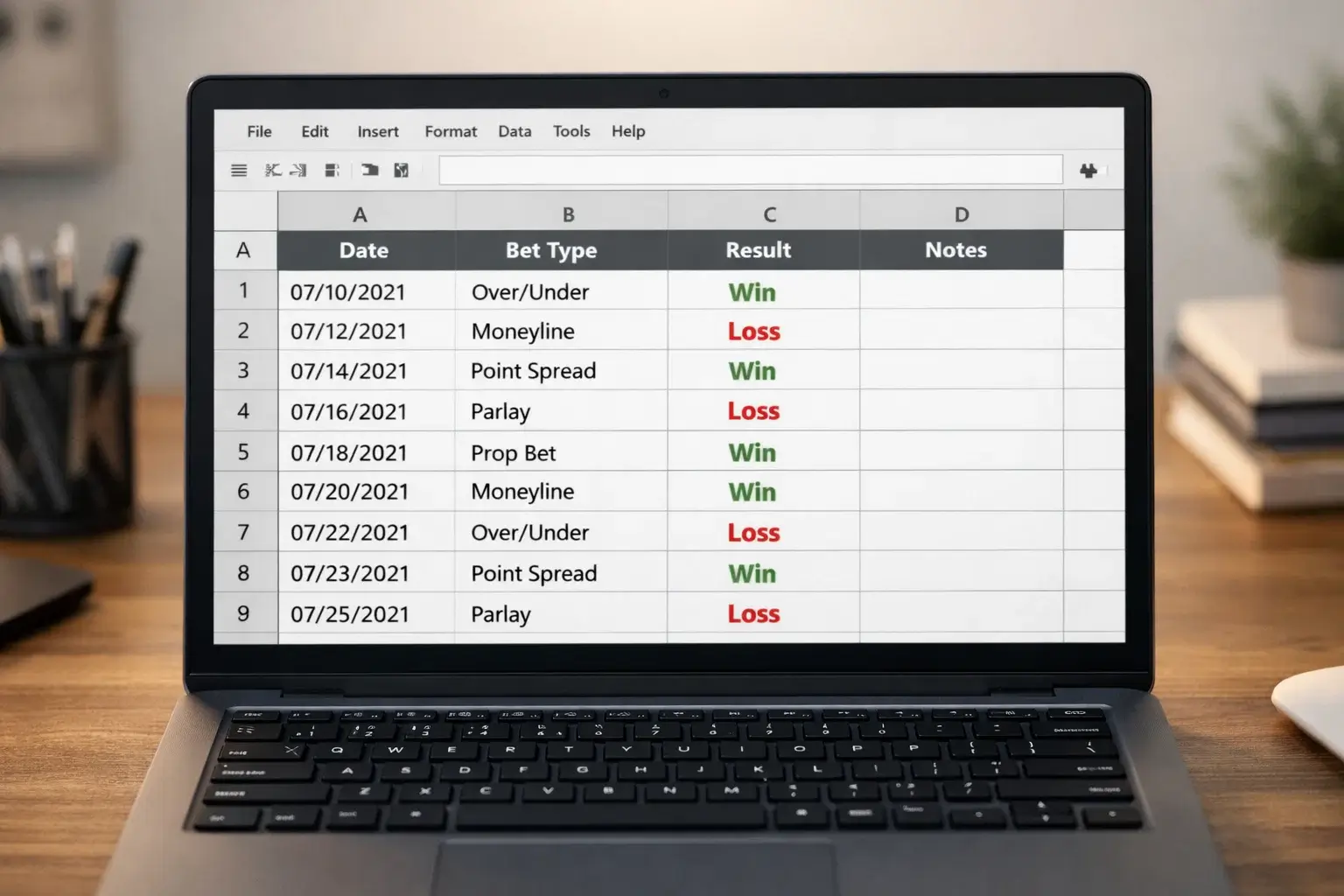
Fixed stake betting means wagering the same amount on every bet regardless of odds, confidence, or recent results. This approach provides maximum simplicity and strongest protection against emotional decision-making.
For Brighton betting, fixed stakes might mean always wagering £10 (one unit) whether backing Brighton to beat a relegation candidate at 1.50 or backing them against Manchester City at 4.00. The stake remains constant; only the potential return varies.
The advantages of fixed stakes include psychological simplicity, ease of tracking results, and protection against overconfidence. You can’t accidentally destroy your bankroll by loading up on a “sure thing” that loses. Every bet carries identical risk to your overall capital.
The disadvantage is that fixed stakes don’t account for varying edge. If you believe Brighton at 4.00 offers more value than Brighton at 1.50 based on your probability assessment, fixed stakes treat both bets identically despite different expected returns.
For beginners and intermediate bettors, fixed stakes remain the recommended approach until you’ve established a profitable track record across at least 200 bets.
Percentage Stakes: Adaptive Sizing
Percentage staking means wagering a fixed percentage of your current bankroll on each bet. As your bankroll grows, stakes increase; as it shrinks, stakes decrease.
With 2% percentage staking and a £1,000 bankroll, your first bet is £20. If you win and your bankroll grows to £1,050, your next bet is £21 (2% of £1,050). If you lose and your bankroll falls to £980, your next bet is £19.60 (2% of £980).
This approach offers natural protection during losing streaks because your stakes automatically decrease as your bankroll diminishes. You can never bust your entire bankroll because each bet represents a smaller absolute amount as losses accumulate.
Percentage staking also provides accelerated growth during winning streaks because stakes increase as your bankroll grows. The compounding effect can produce substantial returns over extended successful periods.
The disadvantage involves slightly more complex tracking and the psychological challenge of reducing stakes after losses when emotional impulses push toward betting more to recover.
Learn the fundamentals in our general bankroll management for football betting guide.
Kelly Criterion: Mathematical Optimisation
The Kelly Criterion provides a mathematically optimal stake size based on your assessed edge over the bookmaker’s implied probability. The formula calculates the stake that maximises long-term bankroll growth.
The basic Kelly formula: Stake % = (Probability × Odds – 1) ÷ (Odds – 1)
For example, if you assess Brighton’s true win probability at 55% against odds of 2.00 (implied probability 50%), the Kelly stake would be (0.55 × 2.00 – 1) ÷ (2.00 – 1) = 0.10 ÷ 1.00 = 10% of bankroll.
Full Kelly staking produces maximum theoretical growth but involves high variance that most bettors find uncomfortable. Fractional Kelly, typically 25-50% of the calculated stake, reduces variance while maintaining the proportional relationship between edge and stake size.
Kelly staking requires accurate probability estimation, which is extremely difficult. If you overestimate your edge, Kelly will recommend stakes that are too large, accelerating losses. Most bettors lack the probability assessment accuracy that Kelly assumes.
We recommend Kelly only for experienced bettors with established track records demonstrating genuine edge. Beginners should avoid it entirely.
Avoiding Dangerous Systems
Progressive staking systems like Martingale (doubling after losses) and Fibonacci (following the sequence after losses) promise recovery from losing streaks but actually accelerate bankroll destruction.
Martingale requires doubling your stake after each loss until you win, at which point you recover all previous losses plus one unit profit. The problem is that losing streaks of 6-8 bets occur regularly in football betting. Starting with a £10 stake, a seven-bet losing streak requires a £1,280 stake on the eighth bet. Most bettors can’t sustain such stakes, and hitting betting limits or bankroll exhaustion produces catastrophic losses.
Fibonacci follows a less aggressive sequence but suffers similar problems. Any system that increases stakes after losses assumes that wins must eventually come, ignoring that losing streaks can extend beyond any reasonable bankroll’s capacity.
These systems don’t create positive expected value. They redistribute your wins and losses, concentrating many small wins early while risking devastating losses later. Avoid them entirely.
Tracking Your Results
Effective bankroll management requires accurate record-keeping. Track every bet including date, match, market, odds, stake, and result. This documentation serves multiple purposes.
First, it provides honest assessment of your performance. Memory deceives us, often exaggerating wins and minimising losses. Written records reveal actual profitability or lack thereof.
Second, tracking enables analysis of which bet types work best for your approach. You might discover that your Brighton Asian handicap bets outperform your goals market bets, suggesting where to concentrate future wagering.
Third, records support tax compliance if your jurisdiction requires declaring betting profits.
Spreadsheets work well for tracking, allowing calculation of key metrics including total units staked, total units won/lost, return on investment (ROI), and performance by bet type.
Brighton-Specific Considerations
Brighton’s betting profile suggests specific bankroll management adjustments.
Their high over 2.5 goals rate creates frequent opportunities in goals markets. Consider allocating portion of your betting specifically to Brighton goals markets, tracking this subset separately to assess your edge in this specific area.
Brighton’s variance between xG and actual results creates regression opportunities, but the timing of regression is unpredictable. Patient bankroll management that survives extended periods of xG-result divergence allows you to benefit when regression eventually occurs.
The numerous market types available for Brighton matches, including match result, handicaps, goals, BTTS, corners, and player props, invite diversification. Spreading bets across different market types reduces concentration risk while allowing you to exploit multiple angles where you perceive value.
Emotional Discipline

Bankroll management rules only work if you follow them. Emotional responses to wins and losses create the greatest bankroll danger.
After losses, the temptation to increase stakes to recover quickly leads to accelerated capital destruction. Stick to your unit sizing regardless of recent results.
After wins, overconfidence might encourage larger bets on subsequent selections. Winning doesn’t mean your next bet will also win. Maintain consistent sizing.
Chasing losses by betting on matches you haven’t properly researched, just to have action, destroys bankrolls. Only bet when your analysis identifies genuine value, regardless of recent results or desire for action.
Set stop-loss limits if necessary. Some bettors benefit from rules like stopping for the week after losing 5 units or stepping back after three consecutive losses to reset emotionally.
Long-Term Perspective
Profitable betting requires hundreds or thousands of bets for edge to manifest through variance. A 5% ROI edge doesn’t mean winning every bet or even every week. It means that over sufficient volume, your wins exceed your losses by approximately 5% of total stakes.
This reality demands patience that bankroll management supports. Conservative unit sizing ensures you survive the inevitable losing periods to reach the long-term where genuine edge produces profits.
Brighton betting offers regular opportunities throughout the Premier League season and beyond. Sustainable bankroll management turns this regular opportunity into compounding returns over seasons rather than boom-and-bust cycles that leave you needing to reload repeatedly.
The goal isn’t to get rich from any single bet or even any single season. The goal is building sustainable betting practice that produces steady returns over years of disciplined wagering.
Maintain financial discipline on our sports wagering platform.
