Brighton Home vs Away Betting: Complete Performance Analysis
 Available in US
Introduction: Why Venue Matters for Brighton
If you’ve been betting on Brighton & Hove Albion without considering whether they’re playing at the Amex or on the road, you’ve been leaving money on the table. Actually, scratch that—you’ve probably been hemorrhaging it. Brighton’s home and away performances diverge so dramatically that treating them as the same team in different postcodes is like betting on Jekyll without accounting for Hyde.
The numbers tell a story that casual observers miss completely. Brighton at home play like a side capable of dismantling anyone in the Premier League on their day. Brighton away? They’re competitive, certainly, but the swagger and statistical dominance that defines their Amex performances evaporates the moment they board the team bus. This isn’t marginal variance we’re discussing—it’s a fundamental split that should inform every betting decision you make.
Understanding this venue-dependent performance isn’t just about backing Brighton more confidently at home. It’s about recognizing when away odds actually represent value, knowing which markets remain profitable regardless of venue, and crucially, identifying situations where skipping the match entirely is the smartest play. The bookmakers have caught on to Brighton’s home-away split, but they still misprice it regularly enough that informed bettors can exploit the gap.
What follows isn’t a collection of surface-level observations about home advantage. We’re diving into the tactical reasons why Brighton’s system works brilliantly on the South Coast but struggles for consistency elsewhere. We’ll examine specific opponent types that either amplify or neutralize venue effects. And we’ll translate all of this into actionable betting frameworks that recognize Brighton home matches and Brighton away matches as fundamentally different propositions deserving separate analytical treatment.
The bottom line: if your Brighton betting strategy doesn’t explicitly account for venue, you’re operating with a flawed model that will cost you over any meaningful sample size. Let’s fix that.
Brighton Home Record: Statistical Breakdown
Brighton’s Amex fortress reputation isn’t marketing nonsense—it’s backed by data that should make any bettor take notice. Over recent seasons, their home record consistently outperforms their away form by margins that exceed typical Premier League home advantage.
Start with the basics: Brighton win roughly 55-60% of their home fixtures across a full season, a win rate that would challenge for European spots if replicated away from home. Their home points per game average hovers around 2.0, placing them firmly in the upper-mid-table bracket when considering only Amex performances. Compare this to their away points per game—often closer to 1.2-1.3—and the venue split becomes impossible to ignore.
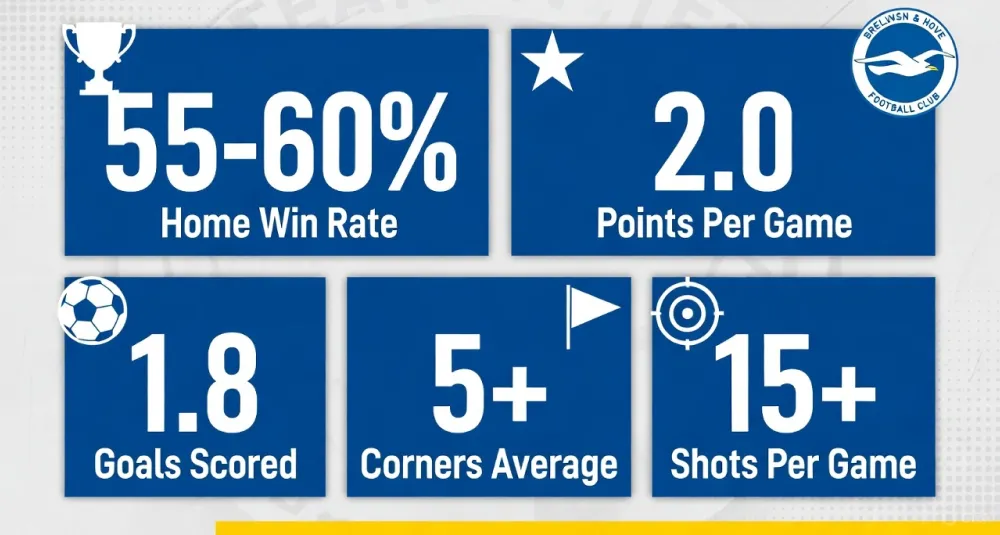
Goal-scoring statistics reveal even sharper contrasts. Brighton average approximately 1.8 goals per home match, fueled by their possession-dominant approach and crowd support that actually matters in modern football. Their shot counts at home regularly exceed 15 per match, with conversion rates that, while not elite, benefit from the sheer volume of chances created. When Brighton pin opponents deep in their own defensive third for 60-70 minutes, eventually something gives.
Expected goals data adds further context. Brighton’s home xG per match consistently ranks among the Premier League’s highest, often matching or exceeding traditional top-six clubs. This isn’t fortunate finishing inflating their numbers—it’s systematic chance creation that produces high-quality opportunities match after match. The xG figures suggest Brighton’s home attacking output is sustainable rather than variance-driven, a crucial distinction for betting purposes.
Defensively, home matches see Brighton concede approximately 1.2 goals per game on average. That’s not exactly watertight, reflecting their system’s inherent vulnerability regardless of venue. But it’s noticeably tighter than their away defensive record, where goals conceded per match climbs closer to 1.5. The difference stems partly from territorial advantage—Brighton control games at home, limiting opponent possessions and therefore chances—and partly from defensive organization that benefits from familiar surroundings.
The both teams to score market hits in roughly 60-65% of Brighton home fixtures, slightly below their overall BTTS rate but still above league average. This reflects Brighton’s attacking dominance at home combined with their persistent defensive vulnerability. They score with reliability, and opponents usually find at least one opening through counter-attacks or set pieces.
Home matches against bottom-half opposition produce Brighton’s most dominant performances statistically. Against teams ranked 11th-20th, Brighton’s home win percentage climbs above 65%, with many matches featuring comfortable two-goal winning margins. These fixtures create ideal conditions for Brighton to impose their style—opponents must engage somewhat to chase the game, creating space Brighton ruthlessly exploit.
Conversely, Brighton’s home record against the traditional top six tells a different story. While they regularly compete and occasionally pull off impressive results, consistent wins prove elusive. Their home record against Manchester City, Liverpool, Arsenal, Chelsea, Tottenham, and Manchester United shows more draws than wins, with occasional heavy defeats when everything goes wrong. The tactical sophistication and individual quality of elite opponents neutralize much of Brighton’s home advantage.
Corner statistics at the Amex deserve specific attention for betting purposes. Brighton average over 5 corners per home match, with that number spiking above 6 against defensive-minded opponents. Their possession-heavy approach pins teams deep, generating corner after corner as attacks break down on the edge of the box. Total corners in Brighton home matches (both teams combined) regularly exceed 10, creating reliable betting opportunities in corners markets.
Card accumulation at home stays relatively modest for Brighton themselves, reflecting their technical superiority and reduced need for desperate fouls. However, opponents often rack up cards at the Amex as frustration mounts from chasing shadows for 90 minutes. The yellow card market for away teams facing Brighton at home occasionally offers value when bookmakers underprice opponent frustration.
Set-piece effectiveness at home surpasses their away record noticeably. Brighton’s coaching staff dedicates significant training time to set-piece routines, and the comfort of familiar surroundings improves execution. Their corner conversion rate at the Amex sits comfortably above league average, making them viable for first goalscorer or anytime scorer bets in matches where corner opportunities seem likely.
Brighton Home Tactical Approach
Brighton’s home dominance stems from tactical execution that works exponentially better at the Amex than on the road. Understanding these tactical elements explains why their home form diverges so dramatically from away performances and why certain betting markets become predictably profitable.

Brighton build from the back with religious devotion regardless of opponent or match state. At home, this approach works because their technical defenders have the composure and crowd support to play through pressure. Their center-backs function as deep-lying playmakers, initiating attacks through progressive passing rather than hoofing clearances. This patient buildup frustrates opponents into pressing mistakes Brighton ruthlessly punish.
The full-backs provide attacking width that stretches opponent defensive lines horizontally. Brighton’s home system creates numerical overloads in wide areas through coordinated runs between full-backs, wingers, and advancing central midfielders. These overlaps and underlaps create crossing opportunities and cutback situations that generate their high shot counts.
Central midfield controls dictate Brighton’s home success. Their midfield pivot maintains possession through short passing triangles that draw opponents into compressed defensive shapes. Once opponent structures become predictable, Brighton’s creative players exploit gaps through sudden vertical passes or dribbles. This patient approach works at home because Brighton control tempo without time pressure from hostile crowds.
Pressing intensity at the Amex significantly exceeds their away pressing metrics. Brighton press high to win possession in dangerous areas, with coordinated forward lines cutting passing lanes while midfielders and defenders push up aggressively. Home crowd energy sustains this high-intensity pressing across full matches, whereas away environments make maintaining such energy expenditure more difficult.
Set-piece routines receive extensive preparation, and Brighton’s home record reflects this investment. They vary approaches between matches, preventing opponents from scouting effective defensive setups. Near-post flicks, far-post runs, short corners creating shooting opportunities—Brighton deploy the full tactical arsenal from set pieces, making them legitimate scoring threats whenever they win corners.
Defensive organization at home benefits from communication clarity that friendly environments enable. Brighton’s high defensive line catches opponents offside with notable frequency at the Amex, disrupting opponent counter-attacks before they develop. The offside trap requires perfect coordination between defenders, something easier to achieve when communication isn’t competing with hostile noise.
Player rotation affects home performances less severely than away matches. Brighton’s tactical system demands technical quality and positional intelligence more than physical dominance or individual brilliance. At home, squad players integrate seamlessly because the system’s structural advantages compensate for individual quality drops. This depth becomes crucial during congested fixture periods when rotation proves necessary.
Counter-attacking vulnerability persists at home but matters less due to territorial dominance. Brighton concede goals at home primarily through opponent counter-attacks that exploit their high defensive line. However, their possession dominance limits counter-attacking opportunities to levels Brighton’s attacking output usually overcomes. They outscore their defensive mistakes rather than preventing them.
The tactical approach creates specific betting angles. Brighton’s possession dominance at home translates into corner opportunities and shot volume that exceed typical home advantage. Their defensive vulnerability ensures both teams usually score despite Brighton’s territorial control. And their patient buildup means matches often remain competitive longer before Brighton’s superiority manifests in scorelines, creating live betting opportunities when odds overreact to tight first-half results.
Brighton Away Performance Analysis
Brighton away from the Amex transform into a fundamentally different team, and bettors who fail to adjust their analysis accordingly pay the price. The statistical divergence between home and away performances isn’t marginal—it’s a chasm that demands completely revised betting approaches.

Away win percentage drops precipitously from the 55-60% home rate to approximately 35-40% on the road. This represents more than typical away form regression—it’s a structural challenge that Brighton haven’t solved despite their tactical sophistication. The numbers suggest away venues neutralize significant portions of Brighton’s systemic advantages.
Points per game away hover around 1.2-1.3, placing Brighton in mid-table territory when only road fixtures matter. Compare this to their 2.0 home points per game and the venue impact becomes impossible to rationalize away as variance. Brighton’s away form wouldn’t qualify for Europe; it would produce relegation anxiety if replicated at home.
Goal-scoring away drops to approximately 1.3 goals per match from 1.8 at home. This half-goal reduction reflects both reduced chance creation and slightly lower conversion rates. Brighton still generate respectable shot counts away—typically 11-13 per match—but these represent lower quality opportunities taken under greater pressure. The composure that defines their home attacking evaporates somewhat in hostile environments.
Expected goals away fall correspondingly. Brighton’s away xG per match sits comfortably below their home figures, indicating genuine chance quality reduction rather than finishing variance. Opponents press more effectively away from the Amex, disrupting Brighton’s buildup and forcing lower-percentage shooting opportunities. The systemic chance creation that makes Brighton dangerous at home doesn’t translate fully to away fixtures.
Defensively, away matches become significantly more problematic. Brighton concede approximately 1.5 goals per away match, a notable increase from their 1.2 home average. Their high defensive line gets exploited more ruthlessly on the road, with opponent forwards finding space in behind through direct passing that bypasses Brighton’s midfield press. The defensive vulnerability inherent to Brighton’s system becomes more costly without home territorial dominance to mitigate it.
Both teams to score hits in roughly 70% of Brighton away fixtures, their highest BTTS rate across any venue-specific split. Brighton’s attacking quality ensures they score regularly even away, while their defensive issues guarantee opponent goals with remarkable consistency. For BTTS bettors, Brighton away matches represent near-automatic selections.
Draw frequency increases away from home. Brighton’s inability to impose their style completely on the road combined with their persistent threat creates stalemate conditions more frequently. Approximately 30-35% of Brighton away fixtures finish drawn, compared to 20-25% at the Amex. These additional draws come primarily from converting away losses into draws rather than away wins into draws.
Performance against the top six away borders on futile from betting perspective. Brighton rarely win away at elite opposition, with their record against big-six teams on the road featuring almost exclusively defeats with occasional draws. The quality gap that Brighton overcome through home advantages becomes insurmountable without the Amex factor.
Conversely, Brighton away against bottom-three opposition remains reasonably profitable. Their quality advantage over relegation-threatened teams persists even away from home, producing win percentages above 50% against the league’s weakest sides regardless of venue. These fixtures represent Brighton’s most reliable away betting opportunities.
Corner statistics away from home decline noticeably. Brighton average approximately 4-5 corners in away matches compared to 5-6 at home, reflecting their reduced territorial dominance. Total corners in Brighton away matches typically fall into the 8-10 range rather than exceeding 10 regularly. Corners markets require downward adjustment for away fixtures.
Card accumulation increases for Brighton away from home. The additional pressure and need to disrupt opponent momentum leads to more tactical fouls and accumulated yellows. Brighton’s disciplined home approach gives way to occasional frustration on the road, making bookings markets slightly more viable when Brighton travel.
Late-goal patterns emerge in away fixtures with notable consistency. Brighton concede and score goals after the 70th minute at elevated rates in away matches. Whether chasing equalizers or conceding late winners, these patterns create second-half betting opportunities and explain why Brighton away matches frequently see dramatic finishes.
This variance is a key part of seasonal betting patterns for Brighton.
Key Differences Between Home and Away Betting
Betting Brighton home versus away requires fundamentally different analytical frameworks. The markets that generate consistent profits at the Amex often become break-even or losing propositions on the road, while certain away-specific angles emerge that home betting doesn’t provide.
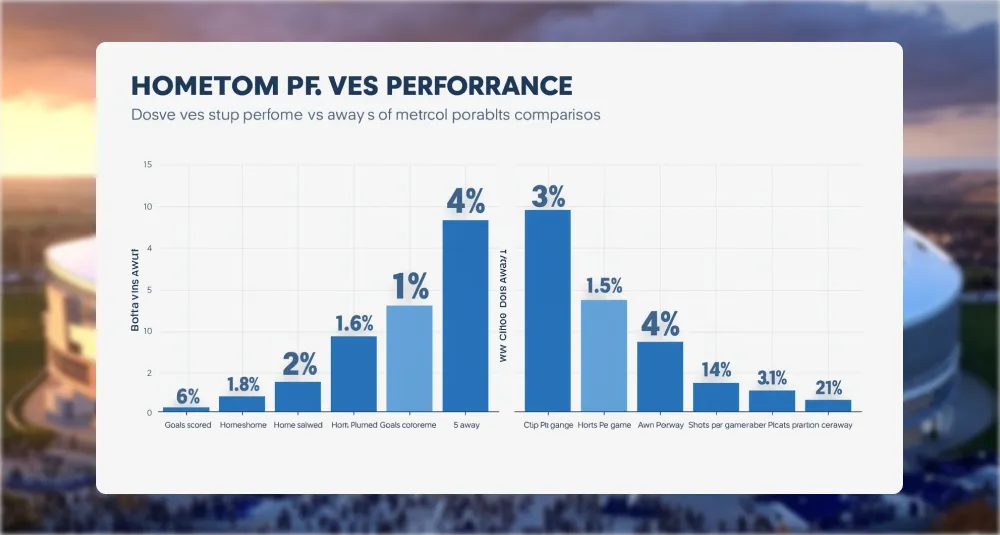
Match result betting represents the clearest distinction. Brighton home against bottom-half opposition offers solid value despite bookmakers pricing in home advantage. Brighton away against anyone except relegation candidates becomes immediately suspect from outright win perspective. The odds rarely compensate adequately for Brighton’s away struggles, making straight win bets unprofitable across meaningful samples.
Draw no bet and Asian handicap markets change dramatically based on venue. At home, backing Brighton -0.5 or -1.0 makes sense against appropriate opponents. Away, these same handicaps become sucker bets that ignore Brighton’s reduced dominance. Conversely, opponent Asian handicaps like +0.5 or +1.0 become attractive when Brighton travel, as their away form supports backing opponents with goal-start advantages.
Both teams to score remains profitable regardless of venue but with different reliability levels. BTTS at home hits 60-65%, providing consistent if not overwhelming returns. BTTS away climbs to 70%, making it Brighton’s single most reliable away betting market. The tactical reasons differ—home BTTS stems from offensive dominance with defensive lapses, while away BTTS reflects more balanced matches where both sides create chances—but the market remains viable either way.
Over/under goals markets require significant threshold adjustments between venues. Over 2.5 goals at Brighton home hits with sufficient frequency to generate long-term profits. Over 2.5 away drops enough in reliability that odds must be significantly better to justify investment. The half-goal difference in Brighton’s scoring between venues cascades into meaningful probability shifts for total goals markets.
Under markets that seem contradictory for Brighton at home occasionally offer value away. When Brighton face defensive-minded opponents away, their struggles to break down compact defenses sometimes produce surprisingly low-scoring affairs. These specific tactical matchups create under betting opportunities that Brighton’s general high-scoring reputation obscures.
Corner markets shift dramatically with venue. Brighton team corners over 5.5 works at home but becomes unprofitable away where 4.5 represents the adjusted threshold. Total match corners similarly require reducing expectations by 1-2 corners for away fixtures. Bookmakers don’t always price corner markets with sufficient venue-based adjustments, creating occasional value on unders away or overs at home.
First half result betting shows interesting venue patterns. Brighton often lead at halftime at home before extending advantages in second halves. Away, they frequently trail or draw at halftime before equalizing later. These patterns create half-time/full-time betting opportunities that recognize Brighton’s different temporal scoring patterns based on venue.
Player prop markets become less reliable away from home. Brighton’s attackers thrive in the Amex environment where chance creation peaks, making goalscorer and shots props viable. Away, reduced service and tighter defending make these same props significantly less profitable. The distributed scoring that characterizes Brighton anyway becomes even more unpredictable without home advantages amplifying individual performances.
Opponent goalscorer markets warrant more attention in Brighton away matches. Brighton’s defensive vulnerability gets exploited more successfully by opponent forwards on the road. When bookmakers offer generous odds on specific opponent scorers, Brighton’s away defensive record supports investment in ways their home defensive record doesn’t.
Live betting strategy requires complete revision between venues. At home, Brighton often trail early before dominating thereafter, creating comeback betting opportunities. Away, early Brighton goals sometimes prove misleading as their defensive issues keep opponents competitive. Live odds often overreact to early goals in both directions, but the nature of value opportunities differs fundamentally by venue.
Bookings markets become more attractive for Brighton away. Their increased card accumulation on the road makes Brighton bookings props more viable than at home where disciplined superiority keeps cards minimal. Conversely, opponent booking props work better at home where frustrated away teams rack up yellows chasing Brighton’s possession.
Penalty markets remain unpredictable regardless of venue but Brighton’s technical style creates penalty appeals with reasonable frequency both home and away. The deciding factor becomes less venue and more opponent defensive approach—teams that defend desperately against Brighton concede penalties with notable frequency regardless of where matches occur.
Set-piece betting angles differ significantly. Brighton’s corner conversion rate at home supports set-piece focused bets. Away, reduced corner counts and execution make these less attractive. Similarly, opponent set-piece threats become more dangerous against Brighton away where defensive organization suffers under pressure.
Accumulator inclusion represents perhaps the starkest venue distinction. Brighton home fixtures against appropriate opponents belong in accumulators where systematic edges combine for enhanced returns. Brighton away matches rarely merit accumulator inclusion except against the league’s absolute weakest sides. The reliability gap between home and away form makes mixing venues within accumulators strategically questionable.
Most Profitable Brighton Home Betting Markets
Brighton home matches offer multiple profitable betting angles that compound over seasons into meaningful returns. These markets exploit systematic advantages Brighton enjoy at the Amex while accounting for their persistent defensive vulnerability.

Match result backing Brighton straight-up represents the foundational home betting angle. Against bottom-half opposition, Brighton’s home win percentage exceeds 65%, creating value when bookmakers price them around evens or slightly below. The edge comes from consistently backing quality against beatable opponents where home advantages amplify existing disparities.
Key here is opponent selection. Brighton home against relegation-threatened teams offers maximum value. Against mid-table opposition, returns diminish but remain positive. Against top-six teams, Brighton’s home record becomes sufficiently spotty that outright wins become speculative rather than systematic bets.
Asian handicap -1.0 provides insurance against single-goal Brighton wins while capturing two-goal victories common against weaker opposition at home. When Brighton dominate bottom-half teams at the Amex, single-goal margins happen but comfortable two-goal wins occur with sufficient frequency to make -1.0 handicaps profitable at appropriate odds.
Draw no bet (Asian handicap 0.0) offers compromise positioning when backing Brighton feels correct but outright win odds seem insufficient. This removes draws as losing outcomes, crucial in matches against resilient opponents who might frustrate Brighton without threatening wins themselves.
Both teams to score yes remains profitable at Brighton home despite lower reliability than away. The 60-65% hit rate combined with odds typically around 1.60-1.70 creates positive expected value across seasons. Brighton’s attacking dominance ensures they score with reliability, while their defensive issues guarantee opponent chances even when territorially dominated.
Over 2.5 goals represents Brighton’s highest-percentage home betting market. Hitting in approximately 65-70% of home fixtures, over 2.5 generates consistent profits when backed systematically. Brighton’s high-scoring nature combines with defensive vulnerability to produce goal-heavy matches that regularly clear this threshold.
Over 3.5 goals becomes viable in specific matchups where opponent attacking quality meets Brighton’s defensive weaknesses. Against mid-table teams with offensive capabilities, Brighton home matches sometimes explode into 4-3 or 5-2 affairs that clear higher totals. These aren’t everyday bets but when tactical matchups suggest high-scoring potential, Brighton home provides favorable conditions.
Brighton team total over 1.5 goals offers strong reliability at home. Clearing this low threshold in approximately 70% of home matches, Brighton’s scoring consistency makes this nearly automatic against beatable opponents. The odds rarely offer substantial returns but the reliability makes it accumulator-friendly.
Over 2.5 Brighton team goals becomes interesting in home matches against poor defenses. When Brighton face bottom-three opposition at the Amex, they occasionally put up three or four goals. While not frequent enough for systematic betting, these specific matchups create opportunities when bookmakers underprice Brighton’s scoring ceiling.
Corners markets provide consistent home betting angles. Brighton team corners over 5.5 hits with sufficient frequency against defensive opponents to generate long-term profits. Their possession-heavy approach pins teams deep, generating corner after corner as attacks break down near the box.
Total match corners over 10.5 works even better, hitting in approximately 60% of Brighton home fixtures. Both teams contribute to corner counts—Brighton through sustained pressure, opponents through occasional breakaways that earn corners. This combined corner generation makes totals more reliable than team-specific corners props.
First goalscorer markets become viable when Brighton face weak defenses at home. Their distributed scoring means no single player dominates these markets, but when odds on Brighton’s attacking players seem generous given opponent defensive frailty, anytime scorer bets offer reasonable value. Focus on players likely to receive good service rather than chasing long-shot odds on defenders.
Brighton to win both halves occasionally offers value against significantly weaker opposition at home. When Brighton truly dominate, they score early and maintain pressure throughout. Against relegation candidates especially, winning both halves becomes achievable with sufficient frequency to justify occasional investment at enhanced odds.
Correct score betting remains speculative but certain scorelines emerge with notable frequency. Brighton 2-1 home wins appear regularly when they dominate territorially but concede one goal through opponent counter-attacks. Against mid-table opposition, this specific scoreline hits often enough that enhanced odds sometimes represent value.
Half-time/full-time betting on Brighton leading at both half and full-time works against weaker opposition. Brighton typically score early at home and maintain advantages. While second-half opponent goals sometimes produce different permutations, Brighton/Brighton half-time/full-time occurs with sufficient consistency against bottom-half teams to merit consideration.
Player shots on target props work better at Brighton home than most venues. Their shot volume means multiple players regularly hit target, creating opportunities when bookmakers offer generous over lines. Focus on Brighton’s attacking players who receive service in central positions rather than wide players whose shots often miss the frame.
Booking points occasionally offer value on opponent cards at the Amex. Away teams facing Brighton’s possession dominance often accumulate frustration yellows. When bookmakers underprice opponent booking points, Brighton’s home dominance supports investment.
Most Profitable Brighton Away Betting Markets
Brighton away betting requires abandoning most home-focused approaches while embracing the specific markets where their away form still provides edges. Profitability away from the Amex demands extreme selectivity about which matches and markets warrant investment.
Match result backing Brighton straight-up away carries significantly more risk than home betting. Their win percentage drops precipitously on the road, making outright win bets profitable only in specific circumstances. Reserve Brighton away win bets for fixtures against bottom-three opponents where Brighton’s quality advantage remains overwhelming despite venue disadvantage.
Draw no bet (Asian handicap 0.0) provides more security when backing Brighton away. This removes the draw as losing outcome, creating insurance against Brighton’s tendency toward away stalemates. When Brighton face mid-table opponents away, draw no bet offers better risk-reward profile than backing them outright despite reduced odds.
Asian handicap markets favor taking opponents with positive handicaps against Brighton away. Opponent +0.5 essentially bets Brighton won’t win, a proposition their away record supports across most matchups. Against elite teams especially, opponent +1 offers strong value by requiring only that Brighton don’t lose by multiple goals—an outcome they avoid with reasonable consistency even in defeats.
Both teams to score represents the single most reliable Brighton away betting market. Hitting in roughly 70% of away fixtures, BTTS yes generates consistent profits despite bookmakers pricing it relatively efficiently. Brighton’s attacking quality ensures they score regularly away from home, while their defensive vulnerability guarantees opponent chances. This combination creates the perfect BTTS environment.
Over 2.5 goals remains viable away but with reduced reliability compared to home fixtures. Brighton away matches still tend toward higher scoring, but the frequency drops enough that odds must be more attractive to justify investment. Reserve over 2.5 away bets for matches against attacking opponents where both teams will engage openly.
Under markets occasionally offer value in Brighton away fixtures against defensive opponents. When Brighton face deep-lying defensive blocks away from home, their struggles to break down packed defenses sometimes produce low-scoring slogs. Under 2.5 becomes interesting in these specific tactical matchups, though it contradicts Brighton’s general high-scoring tendency.
Corners markets away require adjusted expectations. Brighton still generate above-average corner counts on the road, but the totals decrease enough that home-based thresholds no longer apply. Brighton team corners over 4.5 replaces the 5.5+ lines profitable at the Amex. Total match corners similarly requires reducing expectations by 1-2 corners to account for Brighton’s reduced territorial dominance.
Player props away become trickier given reduced chance creation. Brighton’s attackers still warrant consideration for shots on target given their technical quality, but the reduced shot volume away from home means these bets need better odds to justify compared to home fixtures. Goalscorer markets become even more unpredictable given Brighton’s distributed scoring and reduced goal-scoring frequency.
Opponent goalscorer markets occasionally provide value when Brighton face teams with dangerous forwards. Brighton’s high defensive line gets exploited regularly away from home, creating opportunities for pacey opponent strikers. When odds on specific opponent goalscorers seem generous, Brighton’s away defensive record supports investment.
Half-time result markets away show interesting patterns. Brighton often trail at half-time in away matches before equalizing or even winning after the break. This creates potential value in half-time/full-time markets where half-time draw or opponent lead transitions to Brighton win or draw by full-time. These bets require nerve but the comeback patterns appear with notable consistency.
Bookings markets away see Brighton accumulate more cards than at home. The additional pressure and hostile environment leads to more Brighton fouls and yellows. When bookmakers offer Brighton card props, away fixtures make these more viable than home matches where Brighton’s disciplined superiority keeps cards minimal.
Live betting away matches creates different opportunities than home fixtures. When Brighton concede early away, their odds to win lengthen dramatically despite their quality suggesting they’ll equalize. Live betting on Brighton goals or BTTS after they fall behind captures value as panic sellers overreact to opponent leads.
Conversely, if Brighton score early away, their odds to win shorten beyond what single goals justify given their defensive vulnerability. Backing the draw or even opponents after Brighton take early leads occasionally offers value when odds overcompensate for Brighton’s advantage.
Second half over markets in Brighton away fixtures deserve attention. Brighton’s tendency toward late goals—both scoring and conceding—means second halves often produce more goals than first halves. When first halves finish goalless or low-scoring, second half over 1.5 goals becomes attractive given Brighton’s historical patterns.
Penalty markets remain unpredictable but Brighton’s technical style creates penalty appeals with reasonable frequency even away. When Brighton dominate away possession without scoring, penalty odds sometimes lengthen despite their sustained pressure in opponent boxes increasing penalty probability.
The key principle for Brighton away betting: accept reduced reliability compared to home fixtures and adjust expectations accordingly. Markets profitable at the Amex may break even or lose money on the road. Successful away betting requires either finding the specific markets where Brighton’s away form still provides edge—primarily BTTS and opponent-focused bets—or being highly selective about which away fixtures warrant backing Brighton at all.
Conclusion: Venue-Dependent Betting Framework
Brighton’s home-away performance split creates one of Premier League betting’s most exploitable inefficiencies. Bookmakers have adjusted for this split but not completely, leaving gaps that informed bettors capitalize on systematically.
The framework is straightforward: treat Brighton home and away as different teams requiring distinct analytical approaches. At the Amex, back Brighton aggressively in appropriate matchups, focusing on goal-scoring markets, corners, and outright wins against beatable opponents. Away from home, shift toward BTTS betting, opponent-focused angles, and extreme selectivity about which matches warrant backing Brighton at all.
This venue-dependent framework doesn’t mean blindly backing every Brighton home fixture or avoiding all away matches. It means applying appropriate analytical rigor based on venue context. Brighton home against relegation fodder and Brighton away against Manchester City require completely different betting approaches despite involving the same team.
The edge comes from recognizing these distinctions while bookmakers and casual bettors treat Brighton more uniformly. When market odds fail to fully account for venue impact, value emerges. That value compounds over seasons into measurable profit for bettors willing to think situationally rather than applying identical approaches regardless of where matches occur.
Build your Brighton betting around this venue-dependent reality. Track home and away results separately. Calculate separate ROI figures for home versus away betting to identify where your edge actually exists. Adjust stakes based on venue, increasing confidence in home markets where Brighton’s edge is clearest while reducing exposure to away fixtures where uncertainty increases.
Brighton betting rewards specialization, and no specialization matters more than understanding their venue-dependent performance. Master this single distinction, and you’ll outperform the majority of bettors who treat location as afterthought rather than foundational variable shaping every betting decision.
Factor in the Amex advantage on our betting dashboard.
