Brighton Formation Changes
 Available in US
Fabian Hürzeler arrived at Brighton with a reputation for tactical flexibility earned during his remarkable tenure at FC St. Pauli. That flexibility has manifested in the Premier League through formation variations that significantly affect betting outcomes. Brighton don’t simply play one system and stick to it. They morph between shapes based on opponent, game state, and personnel availability, and understanding these variations creates betting edges that most punters never recognise.
The formation shifts aren’t cosmetic adjustments. When Brighton change from a 4-2-3-1 to a 4-4-2 or deploy a back three, the statistical outputs of their matches change measurably. Corner generation patterns shift. Shot volume and quality fluctuate. Defensive vulnerability increases or decreases depending on the specific shape deployed. For bettors who monitor team news and recognise formation indicators, this tactical fluidity becomes a source of value rather than unpredictable variance.
During the 2024-25 season, Brighton demonstrated formations including a 4-2-4 in build-up play against high pressing, a 4-1-2-3 with focus on occupying deep half-spaces, a 4-2-2-2 with dropping strikers, and various three-at-the-back variations for specific matchups. Each configuration produces different match characteristics that affect betting markets in distinct ways.
The Base 4-2-3-1 and Its Betting Profile
Brighton’s most commonly deployed shape features four defenders, a double pivot in midfield, an attacking midfielder operating between the lines, and three forward players. This formation represents their default configuration, inherited from De Zerbi and adapted by Hürzeler to suit his more direct approach.
The 4-2-3-1 produces Brighton’s most consistent statistical outputs. Possession figures align with their seasonal averages. Corner generation follows predictable patterns based on opponent defensive approach. Shot volume and quality reflect the balanced nature of their attacking play. When Brighton deploy their standard formation against typical opponents, betting markets that rely on their established statistical tendencies offer the clearest value.
The double pivot provides defensive stability that moderates Brighton’s vulnerability to counter-attacks compared to more aggressive formations. The two central midfielders can cover space in transition more effectively than single pivot alternatives. This affects BTTS probability, potentially reducing it slightly compared to Brighton’s more attacking shapes.
Pre-match betting on Brighton matches where the 4-2-3-1 appears likely should reference their seasonal averages with reasonable confidence. The base formation doesn’t create the extreme statistical outcomes that more adventurous shapes produce, but it provides the consistency that makes historical analysis predictive.
The Attacking 4-4-2 Variation
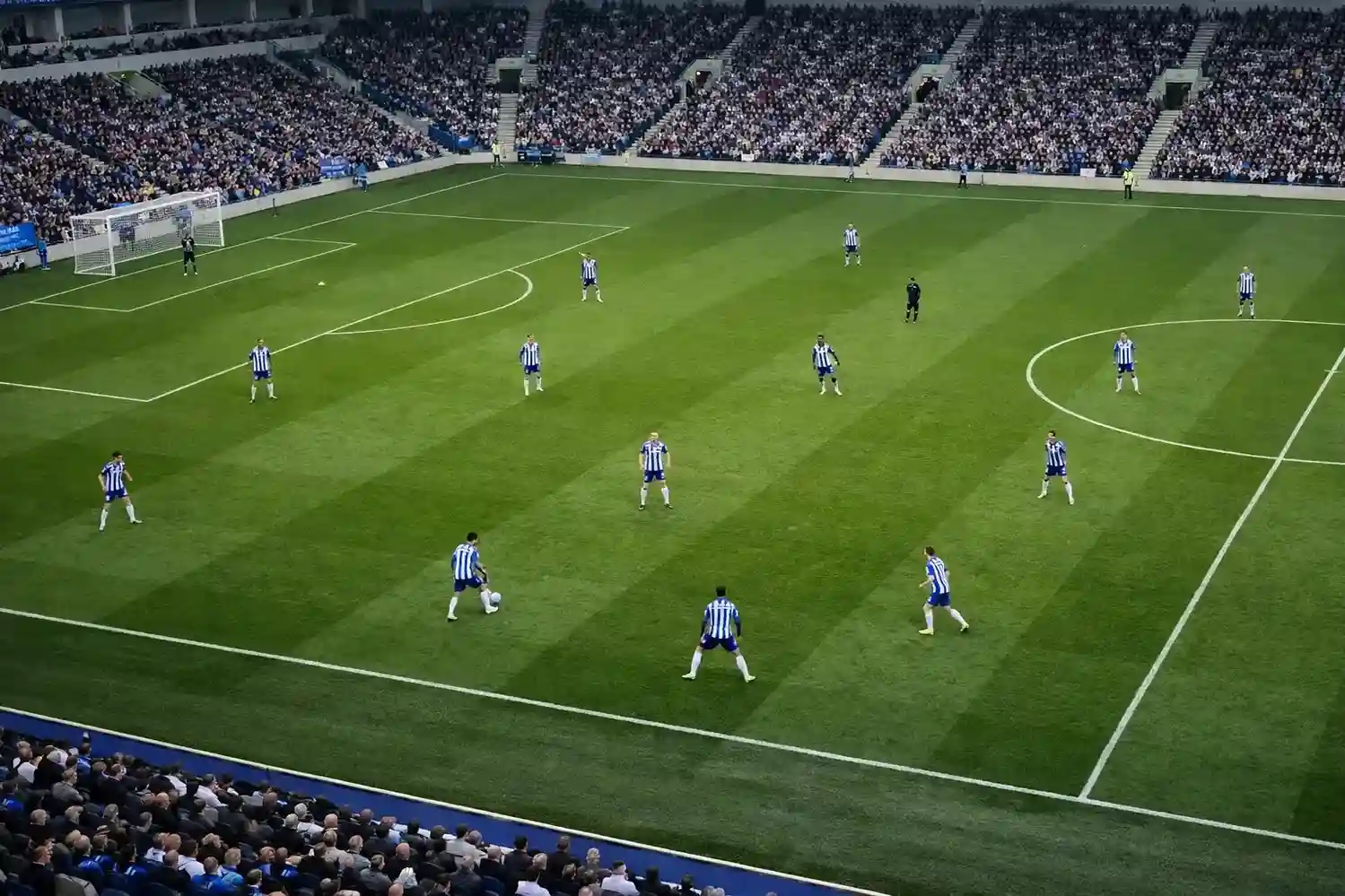
Hürzeler’s most notable tactical innovation at Brighton involves using what appears as a 4-4-2 but functions more like a 4-2-2-2 or 4-1-3-2 depending on game phase. This shape features Danny Welbeck as the focal point with Joao Pedro and Georginio Rutter rotating around and behind him. The wingers, typically including Kaoru Mitoma, provide width while the central areas become heavily populated with attacking threats.
This formation represents Brighton at their most aggressive. The attacking 4-4-2 pushes bodies into dangerous positions, creates overloads in the final third, and produces elevated shot volume and corner generation. When Brighton deploy this shape, over goals markets and Brighton-specific attacking markets offer increased value compared to their base formation matches.
The defensive trade-off becomes equally pronounced. With more players committed forward, Brighton’s counter-attacking vulnerability spikes. The single holding midfielder bears responsibility for covering vast spaces during transitions. BTTS probability increases because opponents find space more readily against Brighton’s stretched defensive shape.
Recognising when Brighton plan to use this formation provides live betting advantages. The shape often emerges when Brighton seek to break down stubborn defences, either from the start against particularly defensive opponents or as matches progress against teams protecting leads. The shift toward the aggressive 4-4-2 signals Brighton’s intent to force the issue, which affects goal probability in both directions.
Three at the Back Configurations
Brighton occasionally deploy back three systems, particularly in away fixtures against opponents whose threat profile suggests the additional central defender provides value. These formations typically feature three centre-backs, wing-backs with licence to attack, and varied midfield and attacking configurations based on specific opponent analysis.
The back three affects betting markets differently than four-at-the-back systems. Brighton’s attacking output typically moderates because one of their attacking positions becomes a defensive one. Corner generation may decrease because their territorial dominance reduces compared to more aggressive shapes. Shot volume drops in some cases, though shot quality may improve as they create from more secure defensive positions.
Defensively, the three centre-back system provides greater protection against counter-attacks. The additional central defender covers space that the high line otherwise leaves exposed. BTTS probability potentially decreases when Brighton deploy back three systems, particularly in away fixtures where their defensive approach becomes more conservative overall.
Team news analysis helps identify when Brighton might use back three configurations. Certain players fit specific systems better than others. When Brighton’s squad availability suggests a back three makes tactical sense, betting markets should reflect the different statistical expectations these formations produce.
Build-Up Shape Versus Defensive Shape
Complicating formation analysis is Brighton’s tendency to use different shapes in and out of possession. They might build attacks in a 4-2-4 structure with wide players high and strikers occupying the opposition’s last line, then defend in a 4-4-2 block with the same personnel. This shape-shifting affects how we should interpret formation information for betting purposes.
The attacking shape determines corner generation, shot volume, and offensive statistical outputs. When Brighton build in aggressive formations that push numbers forward, expect elevated attacking statistics regardless of how they organise defensively.
The defensive shape determines vulnerability to opponent attacks. Even if Brighton attack in aggressive structures, a well-organised defensive shape can limit opponent chances during transitions. The defensive configuration matters most for BTTS probability and opponent-specific betting markets.
Understanding that Brighton’s stated formation may describe only part of their tactical reality helps avoid oversimplified analysis. The 4-2-3-1 listed in team news might become a 4-2-4 in attack and a 4-4-2 in defence. The betting implications depend on which phase of play each market most directly relates to.
Formation as Response to Opponent
Brighton’s formation choices often respond to specific opponent characteristics, making pre-match research on both teams essential for identifying betting value. Hürzeler analyses opponents carefully and adjusts his tactical approach based on their strengths and weaknesses.
Against high-pressing opponents, Brighton often deploy formations with additional build-up options. This might mean the double pivot drops alongside centre-backs to create a back four in possession, or midfielders position themselves to receive between lines of pressure. These adjustments affect the match’s tempo and statistical output compared to fixtures where Brighton face more passive opponents.
Against defensive opponents who sit deep, Brighton typically deploy their most attacking formations. The aggressive 4-4-2 or variations with multiple attacking midfielders emerge when Brighton face teams content to cede possession and defend their penalty area. These matches produce the elevated corner counts and shot volumes that create betting value on Brighton attacking markets.
Against opponents with pace in wide areas or quality in transition, Brighton may adopt more conservative approaches. Back three systems or deeper defensive positioning protect against counter-attacks but reduce Brighton’s own attacking output. Recognising which opponents warrant more conservative Brighton approaches helps adjust betting expectations accordingly.
Using Team News for Formation Identification

Team news provides the clearest signals about likely Brighton formations. Certain players indicate certain systems. When specific defenders, midfielders, or attackers start, formation patterns become predictable even before official lineups specify tactical configuration.
Track which players Hürzeler uses in different systems. Some midfielders appear primarily in double pivot configurations while others feature in more advanced roles. Some attackers play in two-striker systems while others operate from wide positions in single-striker formations. Building knowledge of these personnel-formation connections helps interpret team news betting implications.
Injuries and suspensions force formation changes regardless of tactical preference. When Brighton lose players central to their preferred system, they must adapt, and these adaptations create betting opportunities. A key midfielder’s absence might force a shift from double pivot to single pivot, increasing defensive vulnerability and BTTS probability.
The window between confirmed lineups and kickoff represents prime betting time. When Brighton’s formation becomes clear from their starting eleven, sharp bettors can adjust their positions before odds fully reflect the tactical reality. This window is short but valuable for those prepared with pre-match formation analysis.
Practical Formation Betting Framework
Building formation awareness into Brighton betting requires systematic pre-match preparation. Review Brighton’s recent formations and the contexts that produced each choice. Identify patterns linking opponent type to Brighton tactical response. Monitor team news for personnel clues about likely formation. Consider how formation affects specific betting markets differently.
Corners markets respond to attacking formation, with aggressive shapes producing more corners. Shot markets follow similar patterns. BTTS and over goals markets respond to the combination of attacking aggression and defensive vulnerability, requiring assessment of both in-possession and out-of-possession shapes.
The formation analysis shouldn’t override other analytical factors but rather inform them. A match where Brighton deploy their aggressive 4-4-2 against an opponent with counter-attacking pace represents different betting reality than the same formation against defensive opponents lacking transition threat. Formation context combines with opponent context to shape betting conclusions.
Brighton’s tactical flexibility under Hürzeler makes them fascinating to analyse but complicated to bet on. The multiple formations and their varying betting implications require more sophisticated analysis than backing Brighton with generic market approaches. For bettors willing to invest the analytical effort, that complexity becomes a source of edge that less prepared punters cannot access.
