Common Brighton Betting Mistakes
 Available in US
Every Brighton bettor, from beginners to experienced punters, makes errors that damage their long-term profitability. Some mistakes stem from emotional reactions, others from analytical shortcuts, and many from fundamental misunderstandings about how betting markets work. Recognising these common pitfalls in advance helps you build habits that avoid them.
This guide catalogues the most frequent Brighton betting mistakes and provides practical strategies for prevention.
Overweighting Recent Results
The most pervasive betting mistake involves giving excessive importance to Brighton’s most recent matches. If Brighton lose three consecutive games, bettors often dramatically underestimate their chances in the next fixture. If they win four straight, overconfidence inflates expectations beyond reasonable probability.
This recency bias ignores the reality that small samples tell incomplete stories. Three consecutive losses might reflect bad luck with finishing rather than genuine performance decline. Four wins might include fortunate bounces that won’t continue.
The correction involves examining underlying metrics alongside results. Brighton’s xG figures, chance creation, defensive solidity, and other performance indicators provide more stable form assessment than raw results. A team losing despite strong xG should be expected to regress positively, while a team winning despite weak xG should be expected to regress negatively.
Always ask what the last five matches looked like beneath the scorelines, not just what the scorelines showed.
Ignoring Team News Impact
Brighton under Fabian Hurzeler rotates heavily, using 28 different players during the 2024-25 Premier League season. The starting eleven significantly affects expected performance, yet many bettors place wagers before lineups are confirmed.
Missing that a key attacker has been rested or that a first-choice defender is injured means betting on a different team than the one that actually plays. Odds set before team news fully reflect starting eleven strength may not accurately price the actual matchup.
Wait for confirmed lineups when possible, particularly for player props and markets sensitive to personnel. Follow Brighton news sources that report team news quickly. Adjust your probability assessments based on who actually starts rather than who you assumed would start.
Backing Brighton at Any Price

Fan bettors sometimes back Brighton regardless of odds, confusing support for the team with sound betting practice. Wanting Brighton to win doesn’t make betting on them at 1.25 odds when true probability suggests 1.40 a sensible decision.
Every bet requires probability assessment independent of team allegiance. If your honest assessment gives Brighton 70% win probability, odds of 1.35 (implied probability 74%) offer negative expected value despite your confidence in victory. Passing on such bets demonstrates betting discipline rather than disloyalty.
Profitable betting requires willingness to not bet when prices don’t offer value, regardless of which team is involved. Sometimes the best Brighton bet is no bet at all.
Chasing Losses After Defeats
Brighton’s variance means losing runs occur regularly. When a sequence of Brighton bets loses, the emotional response often involves increasing stakes to recover quickly. This chasing behaviour accelerates losses rather than producing recovery.
The mathematics are clear: if your average bet offers positive expected value, normal staking applied consistently will produce recovery through the natural course of probabilistic outcomes. Increasing stakes after losses doesn’t change the underlying probabilities; it just amplifies the damage from continued bad variance.
Maintain consistent unit sizing regardless of recent results. If three consecutive Brighton bets lose, your fourth bet should remain at normal stake. The losing streak doesn’t mean the next bet is more likely to lose, and it doesn’t justify exceptional stake size.
Neglecting Market Selection
Bettors often focus exclusively on match result betting when numerous alternative markets might offer better value. Brighton to win might be fairly priced at 1.80 while Brighton over 1.5 team goals offers genuine value at 1.65.
Different markets price different aspects of match expectations. Brighton’s attacking quality might be underpriced in goals markets even when their overall win probability is accurately assessed. Their corner generation might be underestimated even when their goal-scoring is correctly priced.
Expand your market consideration beyond match result. Assess whether your analysis supports edges in goals totals, BTTS, corners, cards, handicaps, or other markets. The best Brighton bet for any given match depends on where your probability assessment diverges most from market pricing, not on habitual market selection.
Misunderstanding Asian Handicaps
Asian handicap markets confuse many bettors, leading either to avoidance of potentially valuable markets or to misapplication that produces unexpected results.
Common confusions include not understanding push outcomes (stake returned when handicap margin exactly matches result), misreading quarter handicaps (half stake on each adjacent line), and failing to recognise when handicap markets offer better value than match result alternatives.
Invest time in understanding Asian handicap mechanics before betting these markets. Use online calculators to verify expected returns from different outcomes. Start with simple whole-number handicaps before progressing to quarter-lines. The learning investment pays returns through access to markets where bookmaker margins are often lower than match result markets.
A key mistake is failing to perform line shopping and odds comparison.
Overcomplicating Bet Builders
Same-game multis and bet builders allow combining multiple selections from Brighton matches. The temptation to add selections increases potential returns but often destroys expected value.
Adding a fifth or sixth leg to a bet builder dramatically reduces success probability. Each additional selection compounds the chance of failure. A four-leg bet builder at 10.00 combined odds sounds exciting until you calculate that it will lose roughly 90% of the time.
Keep bet builders simple when you use them. Two or three logically correlated selections capture enhanced odds without excessive complexity. Resist the urge to add legs just because the interface makes it easy. Every addition multiplies failure probability.
Believing in Hot Streaks and Cold Streaks
Bettors often perceive patterns in sequences of wins and losses that don’t actually exist. After three correct Brighton predictions, confidence that you’re on a hot streak leads to increased stakes. After three losses, belief that you’re due for a win leads to similar stake escalation.
In reality, each bet is independent. Past success doesn’t increase future success probability. Past failure doesn’t mean regression is imminent. Perceived streaks reflect normal variance rather than predictive patterns.
Maintain consistent approach regardless of recent results. Your probability assessments and stake sizing should remain stable whether you’ve won five straight or lost five straight. The cards don’t remember previous hands, and betting outcomes don’t remember previous bets.
Ignoring Bookmaker Margins
Bettors sometimes forget that bookmakers build profit margins into every market. Backing selections at face odds without considering the house edge creates systematic disadvantage.
If Brighton’s true win probability is 55% and the bookmaker offers 1.75 odds (implied probability 57%), you’re betting at negative expected value despite Brighton being likely winners. The bookmaker’s margin ensures long-term loss for bets that don’t overcome this hurdle.
Calculate implied probability from odds and compare against your assessed probability. Only bet when your probability assessment exceeds implied probability by enough to overcome margin. Understanding that most bets are priced to favour the bookmaker helps you identify the minority that favour you.
Poor Record Keeping
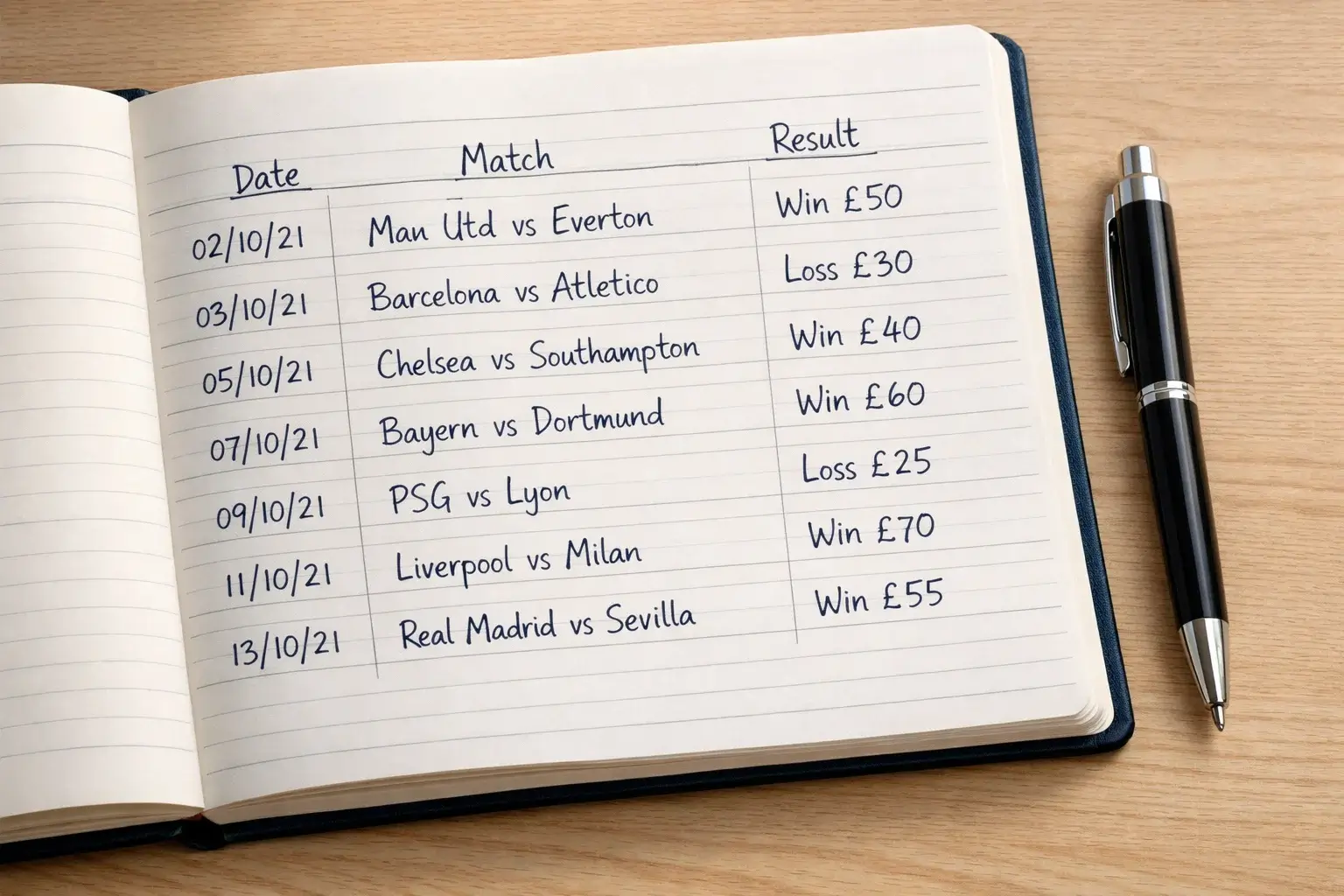
Many bettors don’t track their betting activity systematically. Without records, you cannot accurately assess your performance, identify which bet types work best, or learn from mistakes.
Memory deceives us about betting history. We remember big wins and forget accumulated small losses. We recall successful predictions while overlooking the many unsuccessful ones. Written records provide objective truth that memory cannot.
Track every bet including date, match, market, odds, stake, and result. Calculate rolling profit/loss, ROI by market type, and other analytical metrics. Use this data to improve your approach rather than relying on potentially misleading recollection.
Betting Without Defined Edge
The most fundamental mistake is placing bets without clearly identifying why they offer value. If you cannot articulate why the available odds underestimate Brighton’s true probability in a specific market, you’re gambling rather than betting.
Every bet should have a thesis: Brighton to win offers value at 2.10 because their xG metrics suggest 52% true probability versus the 48% implied by odds. Or: Over 2.5 goals offers value at 1.80 because Brighton’s high line against this counter-attacking opponent should produce chances at both ends.
Before placing any Brighton bet, state your edge thesis. If you cannot identify specific reasons why the bet offers positive expected value, pass on the bet regardless of how interesting the match seems.
Correction Strategies
Avoiding these mistakes requires systematic habits rather than good intentions.
Create pre-bet checklists that force consideration of team news, market alternatives, odds comparison, and edge identification before placing wagers.
Implement waiting periods between analysis completion and bet placement, reducing emotional decision-making.
Review your betting records monthly, identifying which mistakes you’ve made and which corrections are needed.
Set rules that prevent chasing behaviour, such as maximum daily loss limits that trigger betting cessation.
Brighton betting profitability comes from consistently applying sound principles while avoiding predictable errors. The bettors who profit long-term are not those who never make mistakes but those who recognise their mistakes and systematically eliminate them.
Secure your bankroll from our wagering expert site.
