Brighton Under Fabian Hürzeler
 Available in US
When Brighton appointed Fabian Hürzeler as their head coach in June 2024, sceptics questioned whether a 31-year-old with only 18 months of senior management experience could maintain the club’s upward trajectory. The Seagulls had thrived under Roberto De Zerbi’s possession obsession, and finding someone capable of preserving that identity while adding new dimensions seemed ambitious. What Hürzeler delivered instead was something nobody quite anticipated: a tactical evolution that preserved Brighton’s DNA while fundamentally reshaping their statistical profile in ways that create distinct betting opportunities.
The transition from De Zerbi to Hürzeler represents more than a change in personnel. It marks a philosophical shift that affects virtually every betting market connected to Brighton matches. Understanding what changed, what remained constant, and how these adjustments translate into market probabilities gives bettors an analytical edge that surface-level observation cannot provide.
Brighton’s 2024-25 campaign under Hürzeler produced 61 points and an eighth-place finish, their second-best Premier League season ever. They scored 66 goals, ranking fifth in the division, while conceding 59. These headline figures tell part of the story, but the tactical mechanisms driving them tell the rest.
The Direct Revolution
The most striking change under Hürzeler involves Brighton’s approach to ball progression. De Zerbi built a side that rivalled Manchester City for patient possession sequences. Brighton under the Italian averaged over 60% possession, strung together more ten-pass sequences than almost any Premier League opponent, and treated backward passes as tactical weapons designed to draw opponents forward. The approach was aesthetically beautiful and statistically distinctive, making Brighton one of the most predictable teams in the league from a betting analytics perspective.
Hürzeler dismantled this deliberate methodology almost immediately. Brighton’s possession dropped from 60.2% under De Zerbi to approximately 53% under the German. Their ten-pass sequences practically halved. More importantly, their willingness to play direct and vertical passes increased substantially. Where De Zerbi’s Brighton might recycle possession back to the goalkeeper when faced with a compact block, Hürzeler’s Brighton attempt to break through regardless.
The betting implications flow directly from this change. Under De Zerbi, matches featuring Brighton often produced controlled, chess-like encounters with moderate goal totals. The 2023-24 season saw Brighton involved in fewer high-scoring matches than their attacking talent suggested possible because their methodical approach limited both teams’ opportunities. Hürzeler’s directness opened matches up considerably. The 2024-25 campaign saw Brighton lead the Premier League for over 2.5 goals percentage at 71%, an extraordinary figure that dwarfed their previous seasons.
This transformation makes over goals markets more attractive in Brighton fixtures than they were under De Zerbi. The team creates more transitional moments, concedes more counter-attacking opportunities due to their aggressive pressing, and generates more chaotic match dynamics. Where betting on Brighton matches once required patience-focused analysis, it now demands recognition of their high-tempo, high-risk approach.
Pressing Intensity and Defensive Vulnerability
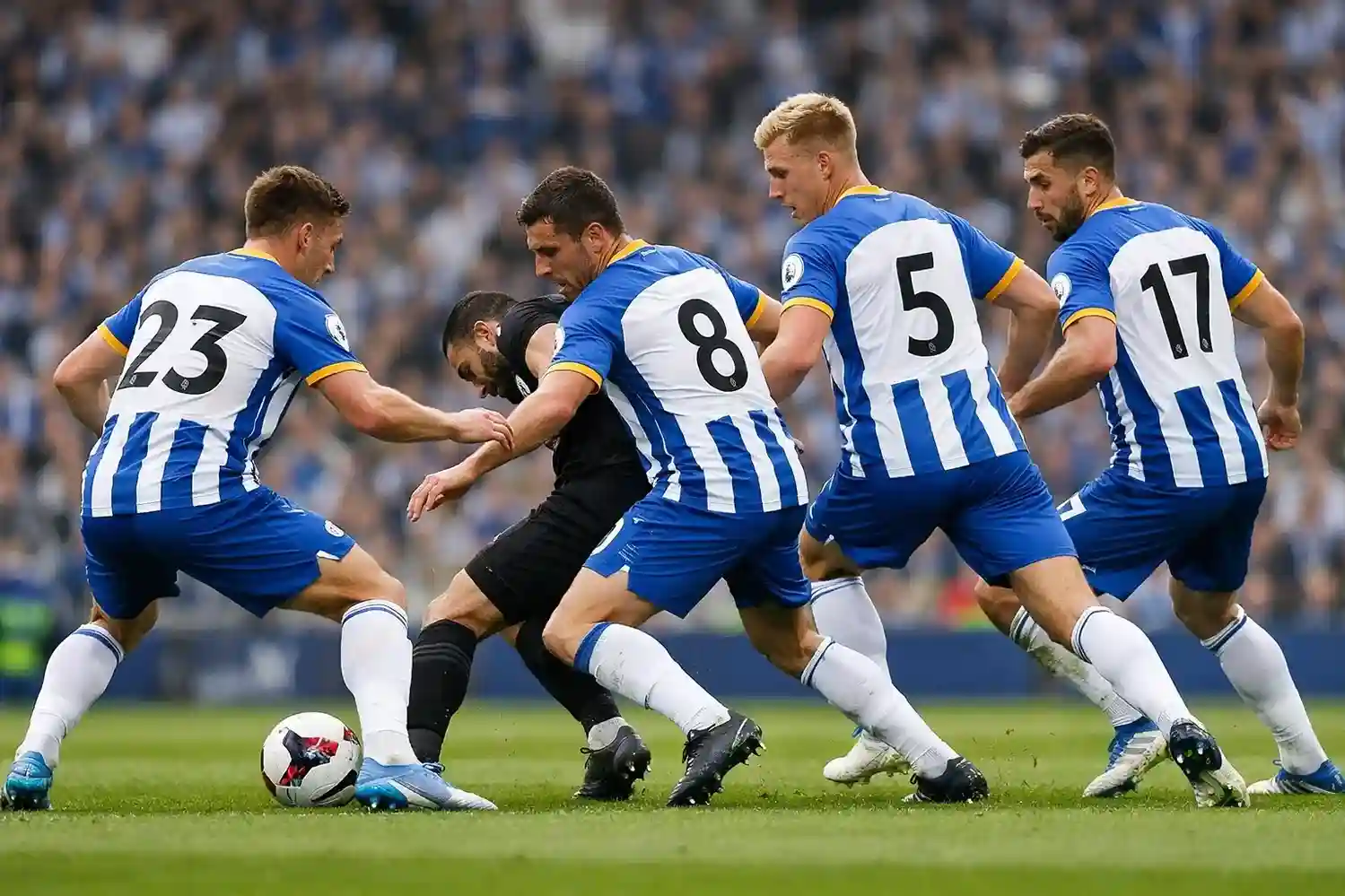
Brighton’s pressing statistics underwent dramatic improvement under Hürzeler. They rose from mid-table in pressures and counter-pressures during De Zerbi’s final season to ranking among the league’s top three pressing teams. Their PPDA dropped to 10.8, placing them alongside Bournemouth, Arsenal, and Liverpool as the division’s most aggressive pressing sides. This intensity reflects Hürzeler’s fundamental belief that winning the ball high up the pitch creates more dangerous attacking opportunities than patient build-up play.
The pressing effectiveness translates into specific betting angles. Brighton generate more high turnovers than under De Zerbi, which creates scoring chances directly from recoveries in dangerous areas. Their pressing triggers are more aggressive and involve more players committing forward, which simultaneously increases their attacking threat and their defensive vulnerability.
The defensive side of this equation matters enormously for betting purposes. Brighton conceded ten goals from counter-attacks during 2024-25, representing over 20% of their total goals allowed. This figure nearly doubled from the previous season’s seven counter-attack goals. The high line that accompanies aggressive pressing leaves space behind that quick opponents exploit repeatedly. Kai Havertz, Brennan Johnson, Amad Diallo, and Mohamed Salah all scored goals running into channels behind Brighton’s square defensive line.
BTTS markets benefit particularly from this dual-edged sword. Brighton will score because their pressing wins possession in dangerous areas. Their opponents will score because the aggressive approach creates exploitable space. The combination produces BTTS rates that consistently exceed 65%, well above the break-even threshold for typical BTTS odds.
Learn how the manager implements Brighton’s pressing system to win games.
Running Intensity and Physical Demands
Hürzeler brought something to Brighton that no Premier League analytics dashboard could have predicted from his St. Pauli tenure: an emphasis on raw physical output that transformed their match-to-match stamina profiles. Only promoted Ipswich Town covered more distance per match than Brighton’s 112.1 kilometres average under Hürzeler. More significantly, Brighton’s sprinting frequency increased dramatically, from 123.1 sprints per match under De Zerbi (ranking 18th in the league) to 152.4 sprints per match under Hürzeler (ranking 6th).
This physical transformation affects betting considerations around match timing and personnel availability. Brighton’s high-tempo approach demands significant physical reserves, which influences how matches evolve. Early-season Brighton fixtures may produce different statistical patterns than mid-season or late-season matches when accumulated fatigue affects intensity. Similarly, matches following short recovery periods potentially see modified Brighton approaches that affect expected outcomes.
Injury patterns also deserve attention. Brighton suffered 48 injuries during 2024-25, more than any other Premier League club. The connection between their demanding physical approach and injury frequency seems plausible, though causation remains difficult to prove. For bettors, monitoring Brighton’s injury list becomes more important under Hürzeler than it was under De Zerbi, because absences affect their ability to execute the high-intensity pressing game that drives their attacking output.
Squad Rotation and Substitution Patterns
Hürzeler deployed 28 different players during his first season, tied for the league high alongside Wolves. This extensive rotation partly reflected injury management, but also represented a philosophical commitment to utilizing his entire squad rather than relying on a fixed first-choice eleven. Brighton’s substitutes contributed significantly throughout the campaign, with the club scoring more goals from players introduced during matches than most competitors.
The rotation tendency affects team news analysis for bettors. Under De Zerbi, Brighton’s starting eleven was relatively predictable match to match. Under Hürzeler, squad rotation creates uncertainty that bookmakers sometimes fail to price accurately. When Brighton’s lineup emerges and differs significantly from expectations, odds may not fully reflect the implications of personnel changes.
Hürzeler’s substitution patterns also create in-play betting opportunities. He made 184 substitutions across the season, more than any other Premier League manager. Fresh legs entering matches typically boost Brighton’s pressing intensity temporarily, creating momentum shifts that affect live betting calculations. Recognizing when these substitutions arrive and their likely impact provides edges in live markets.
What Remained Constant
Despite the evolution, certain Brighton characteristics survived the managerial transition. They remain a possession-oriented team, just less obsessively so. They still build from the back with confidence, still create numerical advantages in build-up through positional rotations, and still generate corners at above-average rates through territorial dominance. The foundational identity that Tony Bloom and Paul Barber established during Brighton’s Premier League era continues under Hürzeler, even as the tactical expression adapts.
Corner markets maintain their value because Brighton’s possession creates set-piece opportunities regardless of their directness in open play. When they push opponents back, blocked shots and desperate clearances produce corners. The mechanism differs slightly from De Zerbi’s patient siege warfare, but the outcome remains similar: Brighton accumulate corners against most opponents.
Similarly, Brighton’s xG profiles suggest sustainable attacking quality rather than fortunate finishing. They create genuine chances through systematic patterns, not random luck. This sustainability matters for bettors evaluating whether Brighton’s statistical outputs represent signal or noise. Under Hürzeler, the attacking numbers appear robust enough to inform confident betting decisions.
Practical Applications for Bettors

The Hürzeler evolution creates specific betting strategies that differ from what worked during the De Zerbi era.
First, over goals markets deserve more attention than previously. Brighton’s directness and defensive vulnerability combine to produce matches with elevated goal totals. The 71% over 2.5 rate during 2024-25 represents genuine value against typical bookmaker pricing.
Second, BTTS bets maintain strong expected value because Brighton’s attacking quality ensures they score while their defensive exposure ensures opponents find opportunities. The dual threat persists regardless of opponent quality.
Third, live betting opportunities increased under Hürzeler because match dynamics fluctuate more dramatically. The pressing intensity creates momentum swings that weren’t present in De Zerbi’s controlled approach. Recognizing when Brighton’s press is working versus when it’s being bypassed helps identify in-play value.
Fourth, team news analysis matters more because Hürzeler rotates extensively and his system demands specific physical capabilities. Absences affect Brighton’s ability to execute their pressing game more significantly than under De Zerbi’s possession system, where technical quality mattered more than athletic output.
The Hürzeler revolution transformed Brighton from a possession-obsessed side into something more dynamic and unpredictable. For bettors willing to track these changes and adjust their approaches accordingly, the evolution creates opportunities that surface-level analysis misses entirely. Brighton remain one of the Premier League’s most analytically fascinating teams, just for different reasons than before.
Follow the evolution of the team on our football strategy homepage.
